













A journey into the myofascial system that is revolutionising strength, movement, and performance — from 1 February 2026, Cesena Fiera Multi-purpose Centre
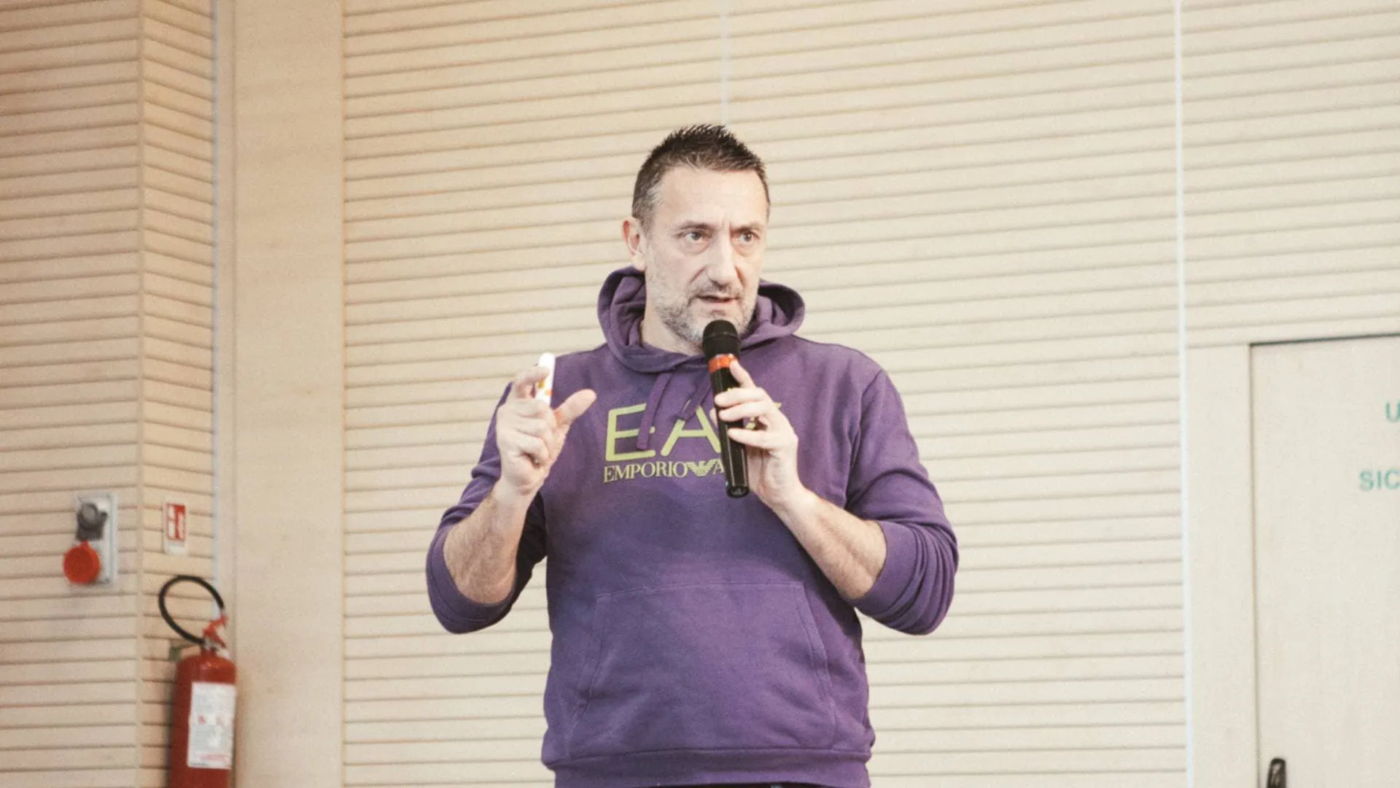
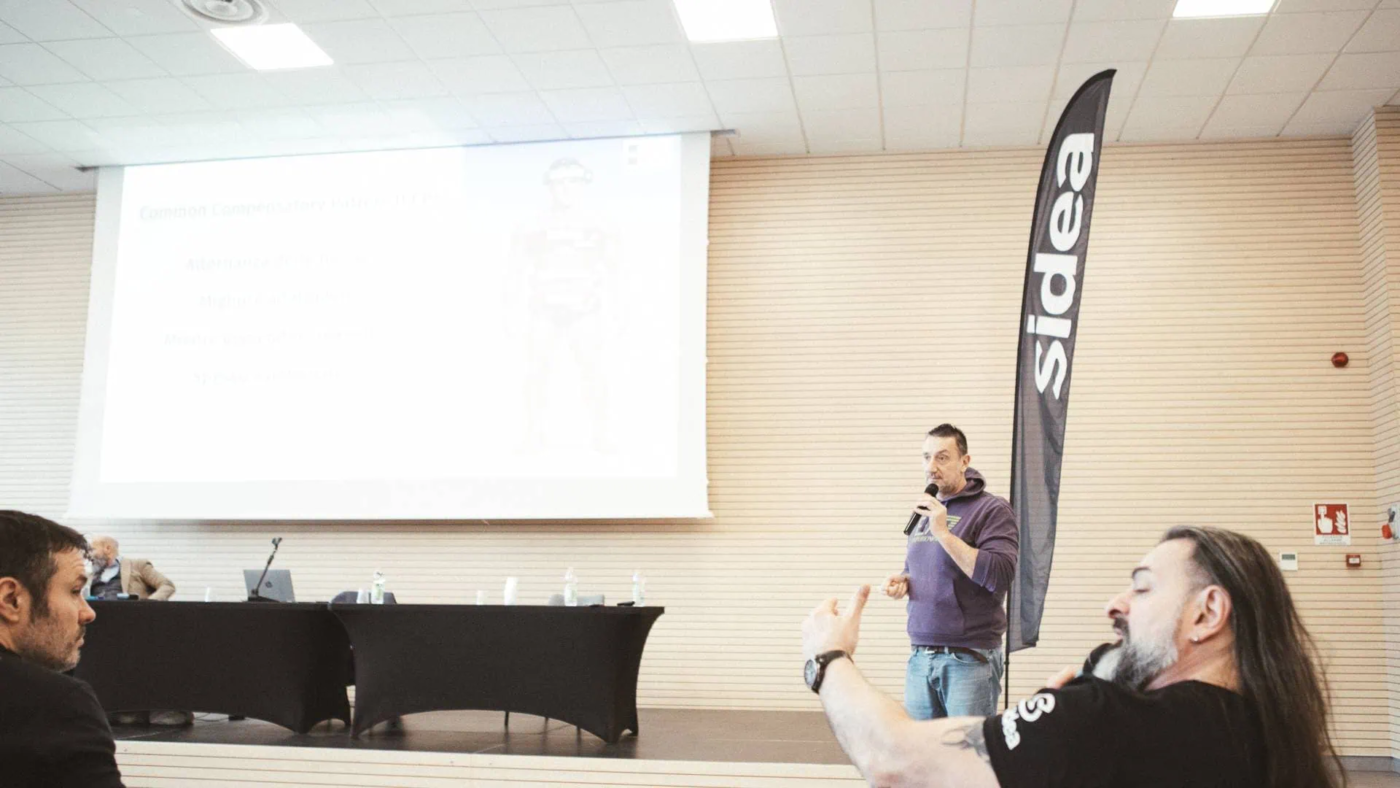
Cesena, Emilia-Romagna — When we observe an athletic movement, we are not just seeing muscles at work. We are seeing the internal organisation of the body at that exact moment. Strength is always the consequence, never the starting point. These are the words with which Dr Luca Franzon — Osteopath D.O. M.R.O.I., graduate in Sports Science, and lecturer in the Second-Level Master’s Degree in Sports Osteopathy — opened his lectio magistralis at the Summit of Strength 2026. This educational event, branded by StrongFirst Italy, took place on Sunday 1 February 2026 at the Cesena Fiera Multi-purpose Centre, with the technical sponsorship of SIDEA, a leading company in functional training and scientific movement dissemination in Italy.
Beyond the isolated muscle: the body as an integrated system
Dr Franzon’s presentation, entitled “Structure Governs Function”, starts from a premise that challenges the reductionist approach still all too common in the worlds of fitness and physiotherapy: function emerges from the organisation of the structure, not from the single muscle. In an era where workouts often focus on the hypertrophy of individual muscle groups, Franzon reminds us that the human body is an integrated system in which the musculoskeletal system, fascial system, nervous system, and respiratory system are in constant dialogue.
«Strength is an output of the system, not just of the muscle» — Dr Luca Franzon
This seemingly simple principle has profound implications: every functional adaptation requires an adequate structural basis. Without an efficient structure, function is compromised by compensations — and, in the long run, compensations turn into pain, stiffness, and loss of performance.
Joint mobility: scientific definition and the role of the fascial system
One of the pillars of his presentation was the redefinition of the concept of mobility. For Franzon, joint mobility is not simply “being flexible”: it is the ability of a joint or joint chain to move actively and passively through its physiological range of motion. This ability is determined by the interaction between:
- joint geometry
- soft tissue tension (muscles, tendons, ligaments, and fascia)
- neurological control
This is where the fascial system comes into play—often overlooked, yet central to Franzon’s philosophy. The fascia is not a simple passive “wrapper”: it is a sensory organ that modulates muscle tone, timing, and motor control through proprioceptive inputs; it is adaptive — repetitive loads and immobility make it stiff, whereas varied movement keeps it functional — and, above all, it is the medium through which a significant portion of force is transmitted laterally, not just along the tendons.
«Movement originates from an integrated unit: muscle + fascia + nervous system, not from the isolated muscle»
Myofascial Chains: The Hidden Language of the Body
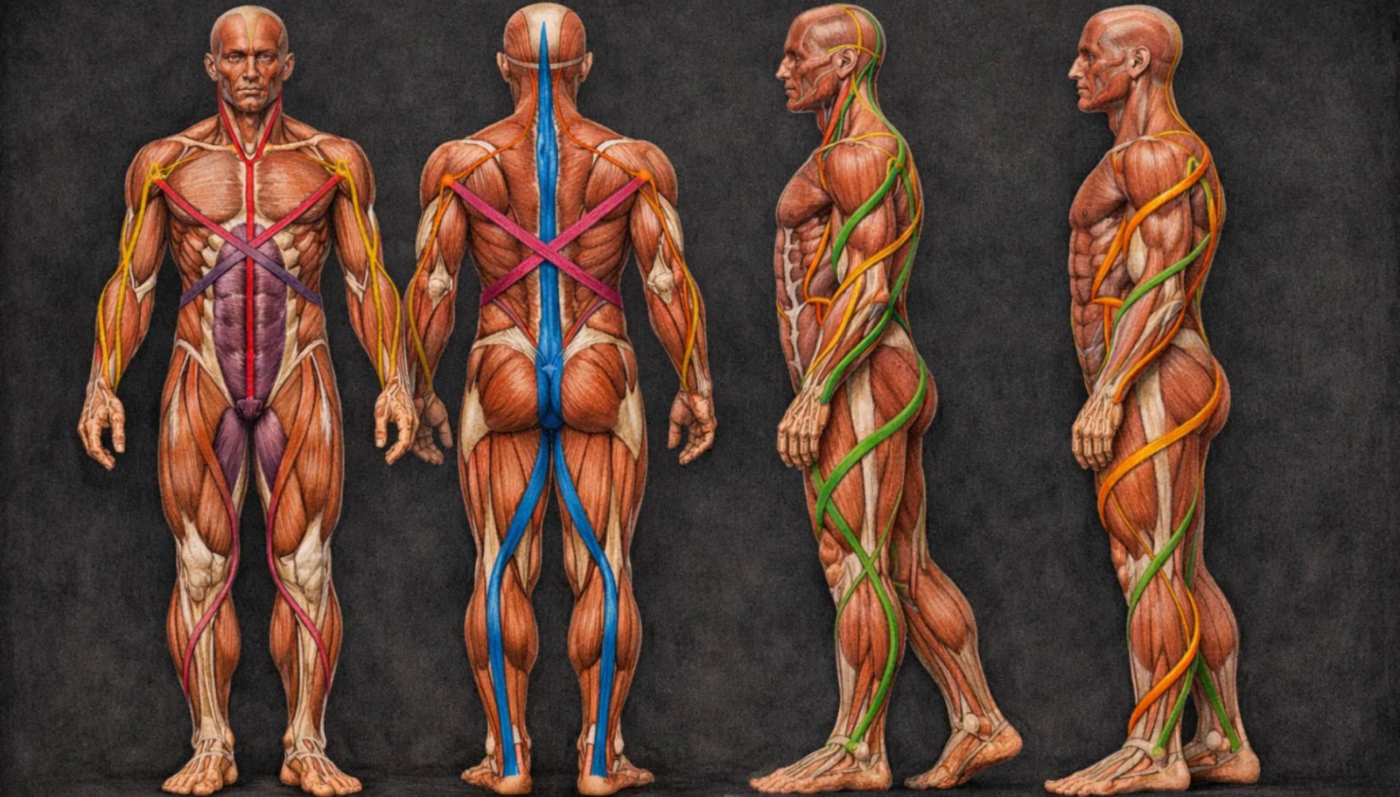
The core of the presentation was dedicated to myofascial chains—structures of tissue continuity that connect the body from top to bottom and from right to left, a concept developed by pioneers such as Françoise Mézières, Leopold Busquet, and Thomas Myers.
Franzon illustrated the main static-dynamic chains:
| Chain | Pathway | Main Function |
|---|---|---|
| Posterior Chain | From the sole of the foot to the skin of the head | Eccentric control of flexion, maintenance of upright posture |
| Anterior Chain | From the sole of the foot to the masticatory muscles | Trunk flexion, iliac retroversion |
| Spiral Chains | Wrap around the body in a double helix | Rotation, inclination, three-dimensional movements |
| Lateral Chain | From the fibula to the head | Frontal stabilization, management of inclination |
“The fascia is spiral-shaped because the human body is designed to handle three-dimensional forces, not linear movements,” Franzon emphasized. “The spiral is not an aesthetic choice of nature, but the most efficient mechanical solution for stability, adaptability, and energy conservation.”
Screening According to Zink: Reading the Body Like an Open Book
One of the most innovative parts of the presentation was the practical application of Gordon Zink’s fascial pattern, an osteopathic model that reads fascial tensions through four bodily “diaphragms”: the cranium, the shoulder girdle, the thoracic diaphragm, and the pelvis.
Franzon explained how the body tends to organize itself into alternating torsion chains—the Common Compensatory Pattern (CCP)—which, in a healthy state, allow for better adaptability and lower energy expenditure. When these torsions cease to alternate and align in the same direction, the body enters a Non-Compensatory Pattern (NCP), which is associated with a reduced capacity for adaptation, a higher risk of pain, and chronic dysfunction.
| Pattern | Characteristics | Clinical Interpretation |
|---|---|---|
| CCP (Compensated) | Alternating torsions at the 4 levels, fluid movement, preserved nasal breathing | Stable system, wide adaptive margin |
| NCP (Uncompensated) | Aligned torsions, stiffness, compensations visible even at rest | Fragility under stress, risk of dysfunction |
“Zink’s fascial pattern allows you to understand how an athlete distributes forces, where they compensate, and how much adaptive margin they still have,” Franzon explained, presenting quick functional tests—from the Chin Tuck to the Ear to Shoulder, from arm elevation to the squat—that can distinguish between a compensated and uncompensated pattern in just a few seconds, even under load.
The SIDEA Philosophy: Movement Science for Professionals and Enthusiasts
Dr Franzon’s presentation at the Summit of Strength was not just a moment of advanced education for professionals: it was yet another confirmation of SIDEA’s commitment to promoting a movement culture founded on science and evidence.
SIDEA — an Italian company with a consolidated global leadership in functional training — has always placed the principle that movement is culture, health, and performance at the core of its mission. Sponsoring an event like the Summit of Strength, bringing speakers of Dr Franzon’s calibre to the stage, means investing in the continuous education of coaches, physiotherapists, osteopaths, and enthusiasts, offering them concrete tools to read the human body with greater precision and respect.
The SIDEA philosophy is built on an approach that does not separate scientific research from daily practice: the equipment, protocols, and methodologies offered are designed to be functional for the real body — one made of fascia, myofascial chains, and neurological patterns, not just isolated muscles. In this sense, the partnership with StrongFirst and the presence of speakers like Franzon represent a perfect bridge between the academic-osteopathic world and that of strength training.
Why This Changes Everything: From Theory to Practice
What Dr Franzon brought to Cesena is not just a technical update: it is a paradigm shift. If structure governs function, then training for strength without first ensuring an efficient structure means building on unstable foundations. It means creating compensations that, sooner or later, will turn into limitations or injuries.
For the athlete, this translates into a greater awareness of their own body and the ability to recognize when a movement is “genuine” and when it is “compensated.” For the coach, it means having the tools to personalize the approach, respecting the fascial and neurological history of the person in front of them. For the physiotherapist and the osteopath, it means being able to read pain not as a localized problem, but as the expression of a broader structural pattern.
As Franzon recalled, quoting Nietzsche: “There is more wisdom in your body than in your deepest philosophy”. Perhaps the time has come to listen to it more closely.
Sale!


Frequently Asked Questions (FAQ)
What is the Summit of Strength?
It is the annual educational event organized by StrongFirst Italy, dedicated to strength training using kettlebells, bodyweight, and functional movement. The 2026 edition took place in Cesena on 1 February.
Who is Dr Luca Franzon?
He is an Osteopath D.O. M.R.O.I., a graduate in Sports Science, a lecturer in the Master’s Degree in Sports Osteopathy, and a specialist in the myofascial system and functional screening.
What are myofascial chains?
They are structures of tissue continuity that connect muscles, fascia, and joints into functional “tracks,” allowing the body to distribute forces and movements in an integrated manner.
What is the Zink Test?
It is an osteopathic assessment tool that analyzes fascial rotational preferences across four transitional zones of the body to identify compensated (CCP) or uncompensated (NCP) patterns.
What does “structure governs function” mean?
It is the principle stating that the body’s ability to move and generate strength depends primarily on its structural organization (joints, fascia, nervous system), rather than just the strength of isolated muscles.