






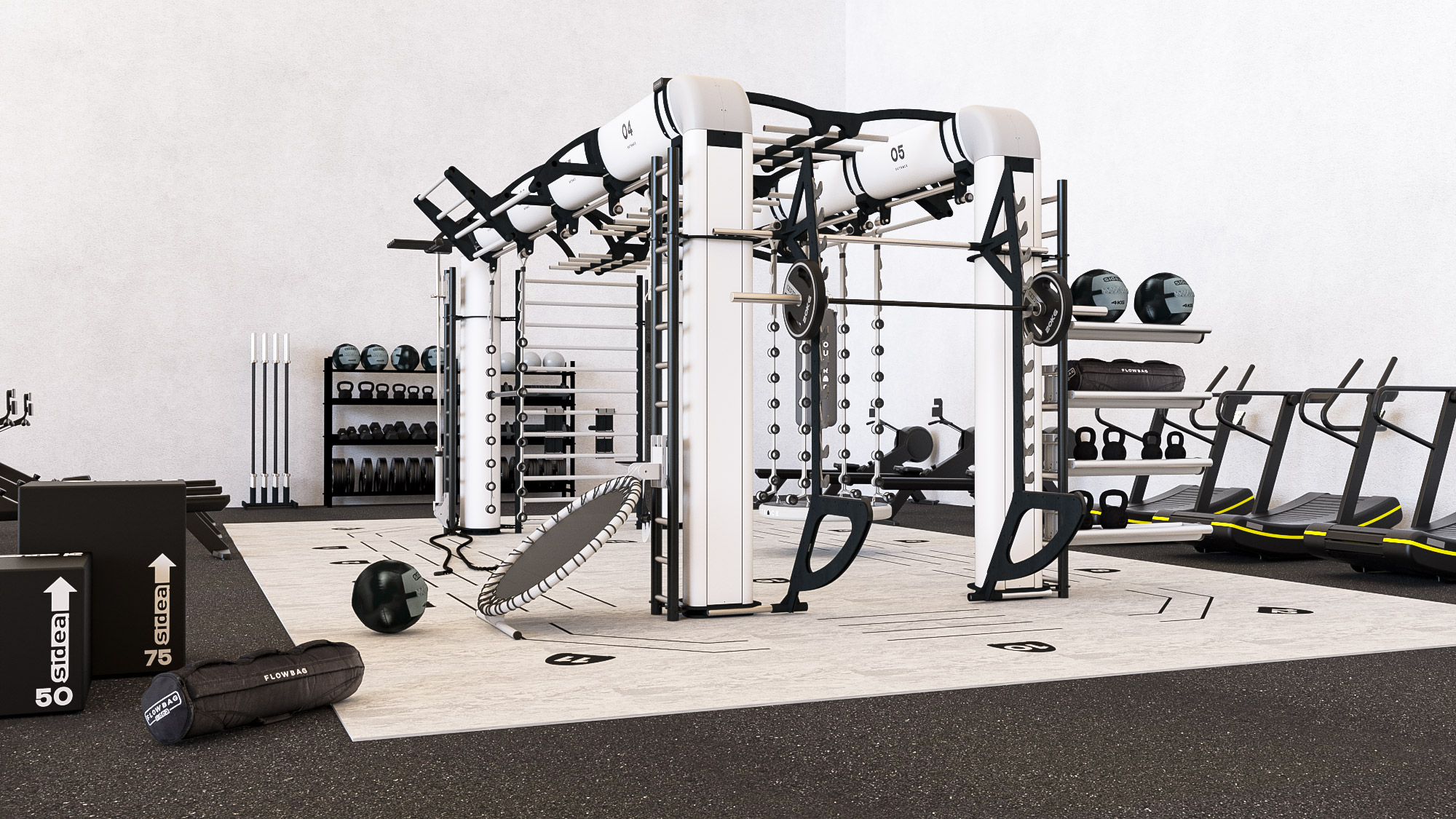
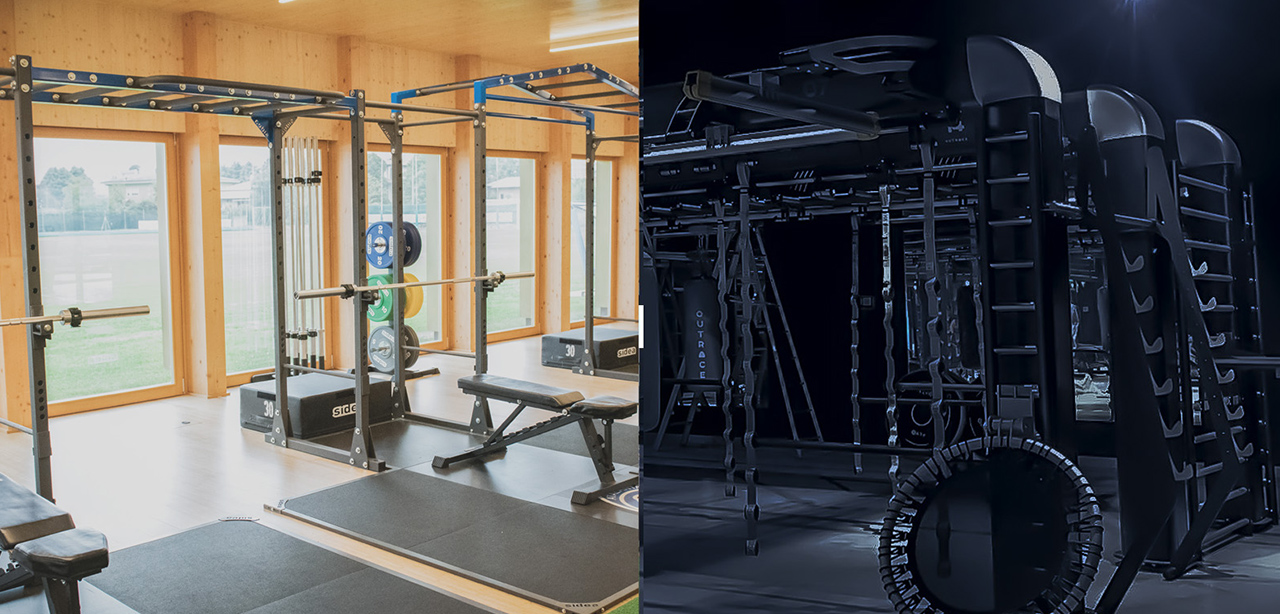
There is no such thing as the best rack: there is only the one that best suits your space and the way you train.
Choosing a rack doesn’t simply mean deciding which piece of equipment to buy.
It means understanding how it will be used, how much space you actually have available, whether it can be fixed to the wall or floor, how many users will need to use it, and above all, which exercises you want to perform at that station.
Two simple barbell stands and a professional rack weighing over 500 kg may both allow you to perform a squat. Yet they are designed to meet completely different needs.
That’s exactly where you should start.
Before comparing prices, dimensions or accessories, it’s worth asking yourself four simple questions:
- How much space do I actually have available?
- Can I secure the structure to the wall or floor?
- Will the rack be used by just one person or by multiple users throughout the day?
- Do I mainly need it for squats and bench presses, or do I want to perform a wide range of exercises at the same station?
Once you’ve answered these questions, choosing the right rack becomes much easier.
Limited Space and the Need to Free Up the Room: 9045/1 Olympic Bar Support Pro
When your workout area needs to serve other purposes as well, a permanent structure can become impractical.
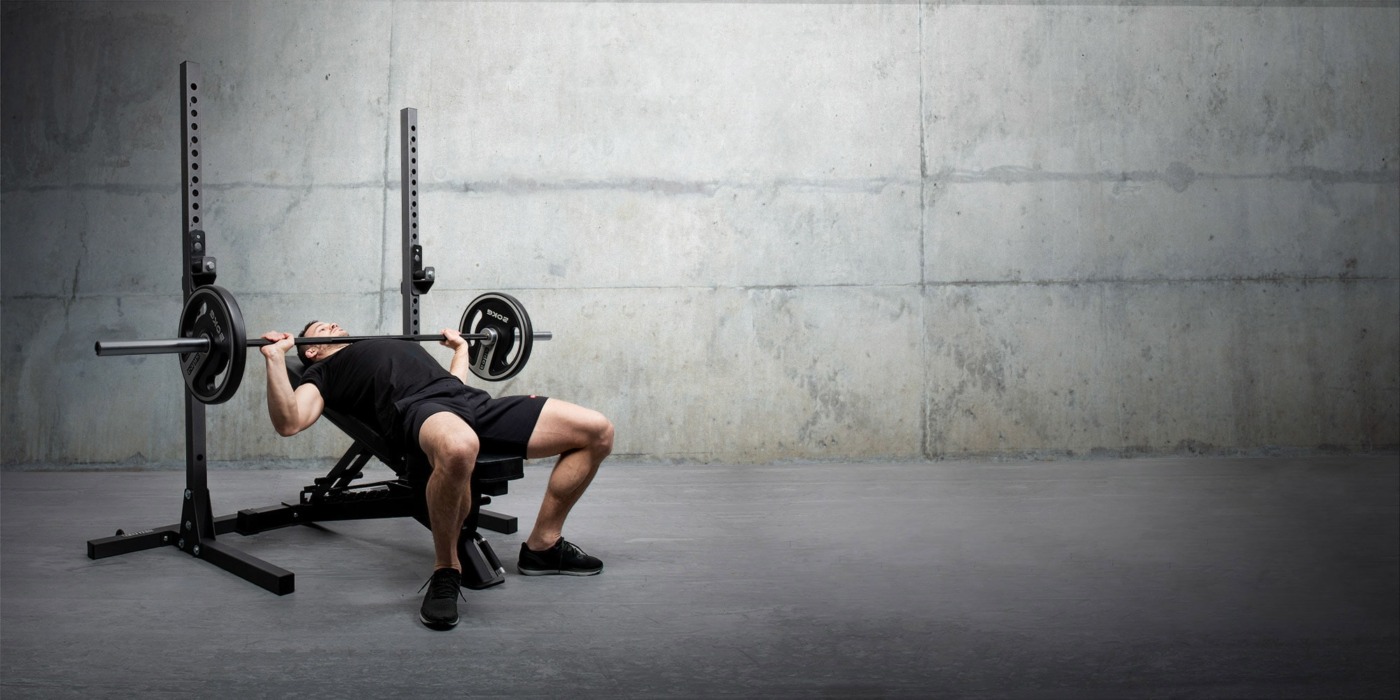
In this case, the simplest solution is the 9045/1 Olympic Bar Support Pro.
It consists of two independent barbell stands, equipped with wheels and specifically designed to be easily moved, transported or stored away after use. SIDEA offers them for squats and a wide range of strength training exercises, with the option of pairing them with a bench and Safety Spotters.
The main advantage, therefore, is not just their compact footprint.
It’s the freedom to reconfigure your space.
In a home gym set up in a multipurpose room, a small personal training studio, or a strength and conditioning environment where equipment needs to be moved frequently, this feature can make all the difference.
When to Choose It
It’s particularly suitable when:
- The space cannot be permanently occupied by training equipment.
- The rack needs to be moved easily.
- Training is primarily focused on barbell exercises and bench presses.
- A large, modular structure is not required.
When to Consider an Alternative
If, on the other hand, you’re looking for a permanent, more substantial training station designed to accommodate a wide range of accessories, it makes sense to move up to a more advanced solution.
-
When Squats and Bench Press Are at the Heart of Your Training: 9045 Powerlifting Rack
More versatility doesn’t always mean a better choice.
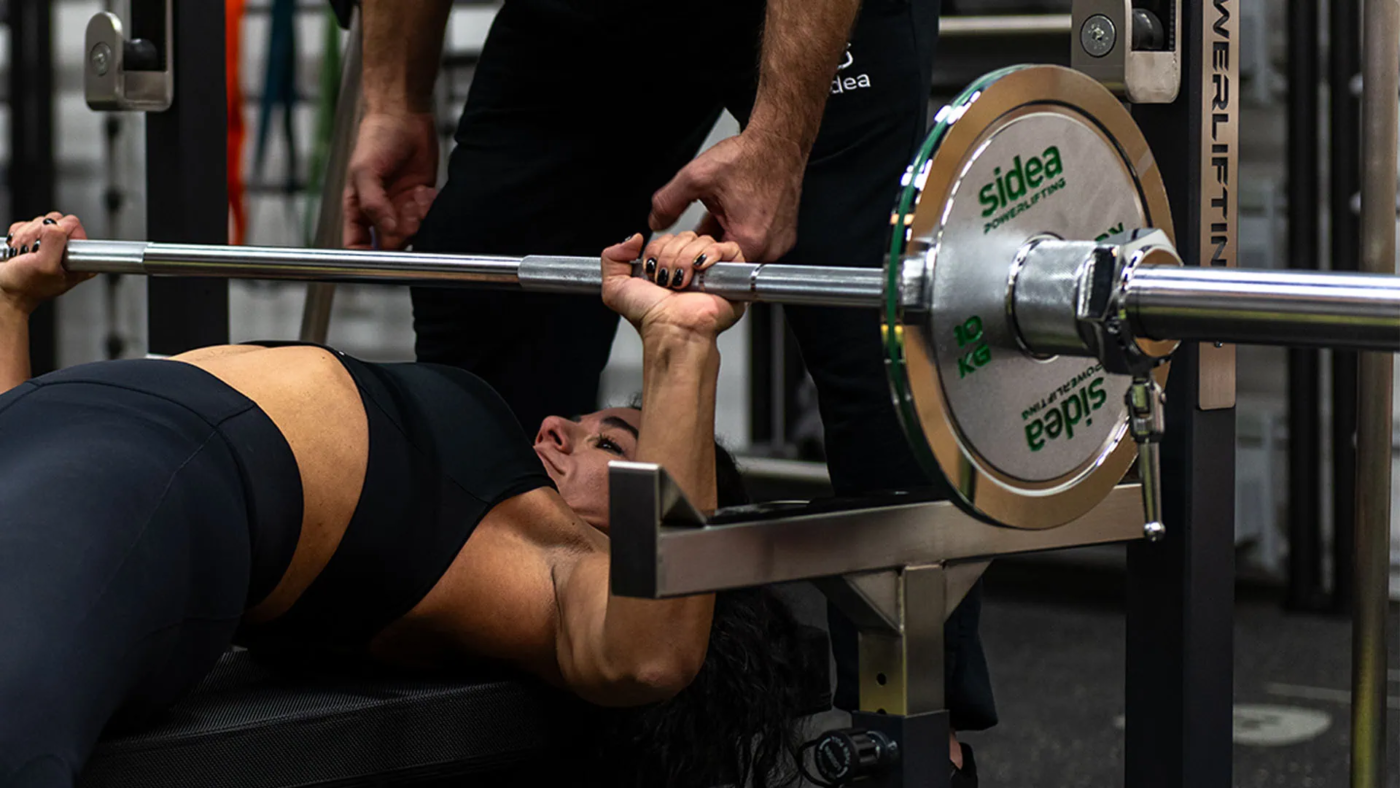
If your main goal is to train seriously on squats and bench presses, a dedicated structure may be a more sensible option than a multifunctional machine.
The 9045 Powerlifting Rack was designed with exactly this philosophy in mind.
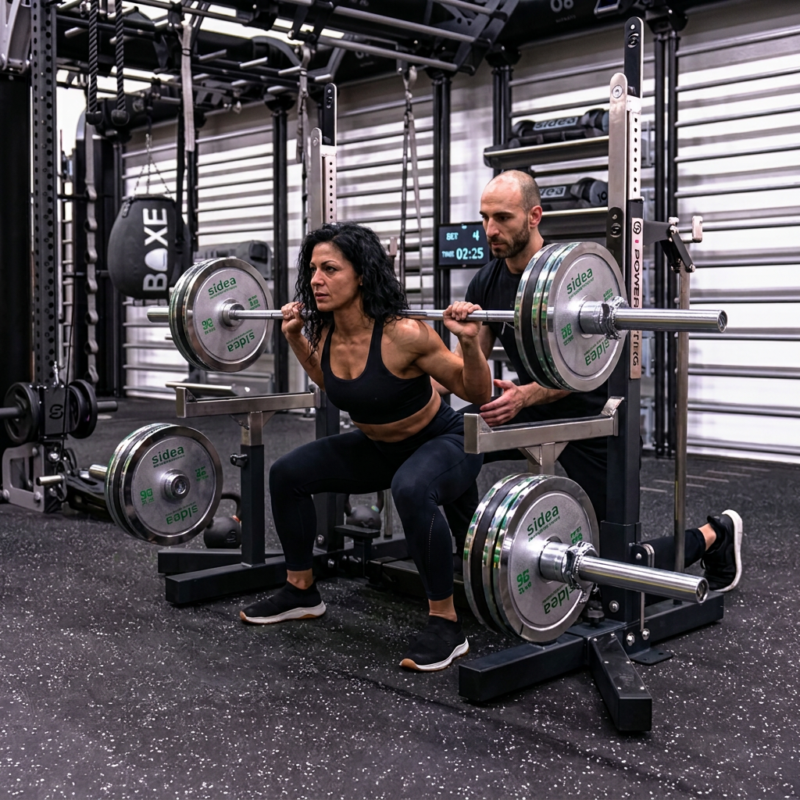
It is a professional training station specifically developed for squats and bench presses, built to Powerlifting standards and equipped with Safety Spotters, dedicated adjustments and barbell supports with rollers. It can also be integrated with the Flat Bench 9020 through a dedicated anchoring system.
Its concept is very straightforward:
It doesn’t try to do everything. Instead, it focuses on creating an extremely effective training station around the main lifts.
For a Powerlifting athlete, a strength-focused gym or a home gym designed primarily around squats and bench presses, this specialization is a real advantage.
And it can work even in less conventional settings.
During the lockdown, for example, a Powerlifting Rack literally replaced the sofa in my living room: squats and bench presses between episodes of Sons of Anarchy.
It may not have been an interior designer’s first choice, but from a training perspective, it worked perfectly.
And that’s exactly the point: the right solution isn’t necessarily the one with the most features, but the one that best matches what we actually do.
Limited Depth and an Available Wall: 9095/16 Half Power Cage
In some training environments, the main limitation isn’t the overall floor space, but the available depth.
If we have a structurally suitable wall, it can make sense to use it as part of the training structure.
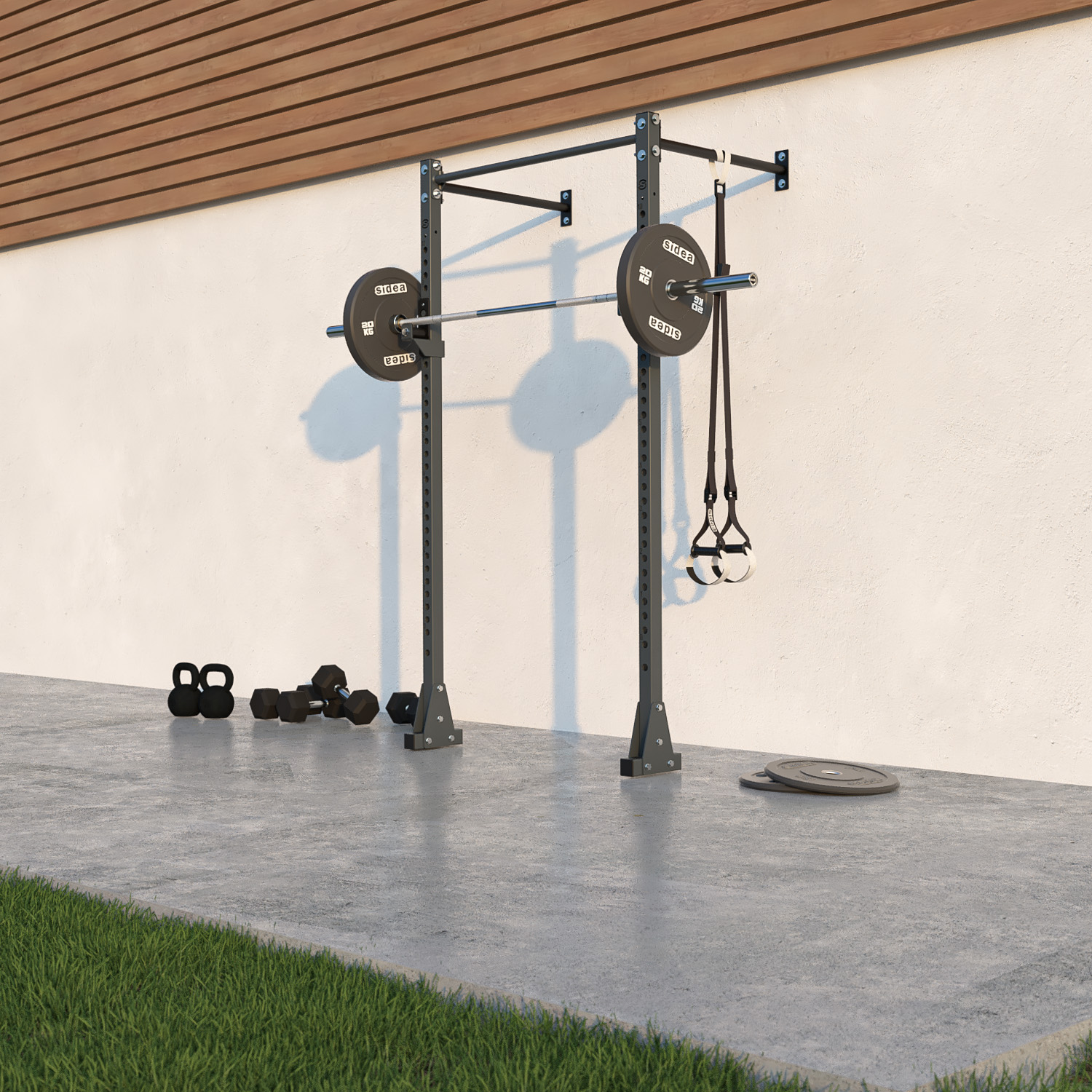
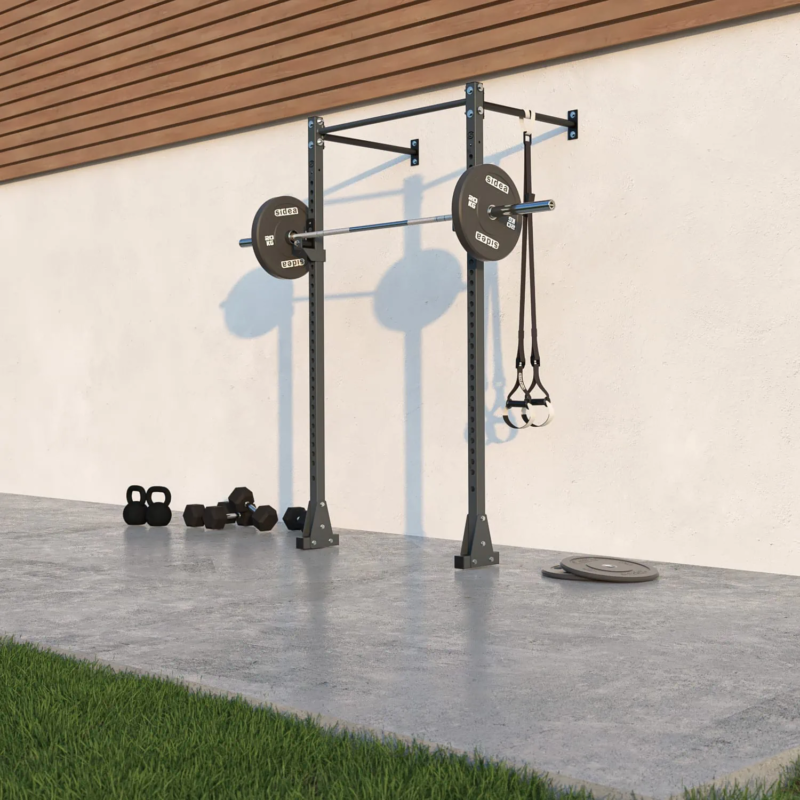
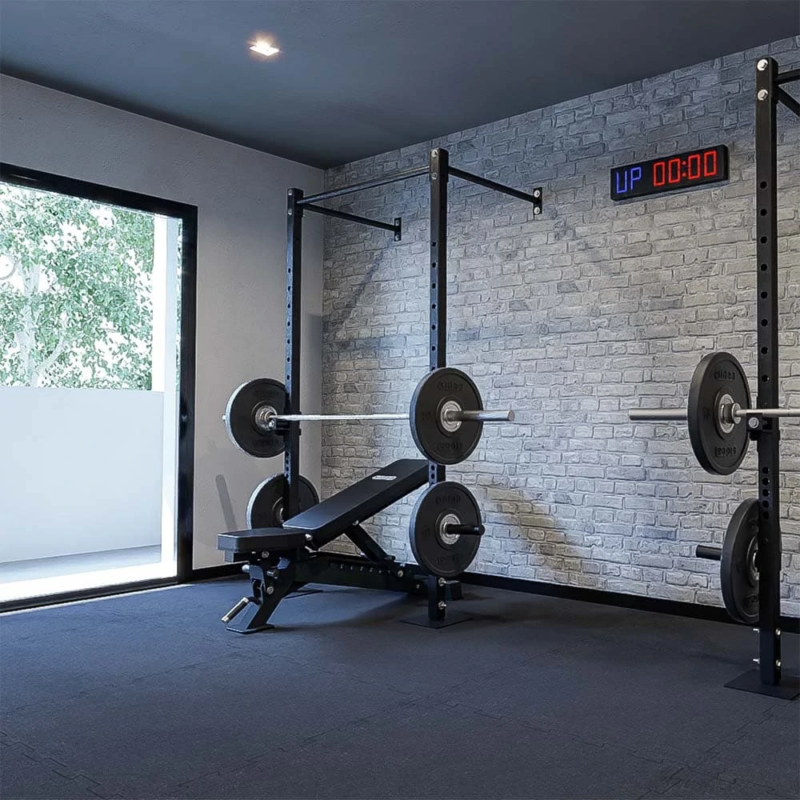
The 9095/16 Half Power Cage Rack is the wall-mounted version of the 9095 Power Cage. It stands approximately 230 cm tall, features barbell supports and a pull-up bar, and is compatible with both flat and adjustable benches.
Compared to a full power cage, it allows you to create a solid training station while taking up less depth.
This solution can be particularly interesting for:
- Personal training studios.
- Home gyms.
- Strength training areas with available wall space.
- Training environments where walkways and circulation space need to be preserved.
Of course, there is one important requirement: installation.
A wall-mounted structure must be designed around the characteristics of the wall and the environment in which it will be installed. Height also needs careful consideration: with a structure approximately 230 cm tall, it’s important to have enough clearance to use the pull-up bar properly.
If we cannot or do not want to use the wall, we’ll need to consider a different solution.
Compact Yet Freestanding: 9098/1 Standing Rack Pro
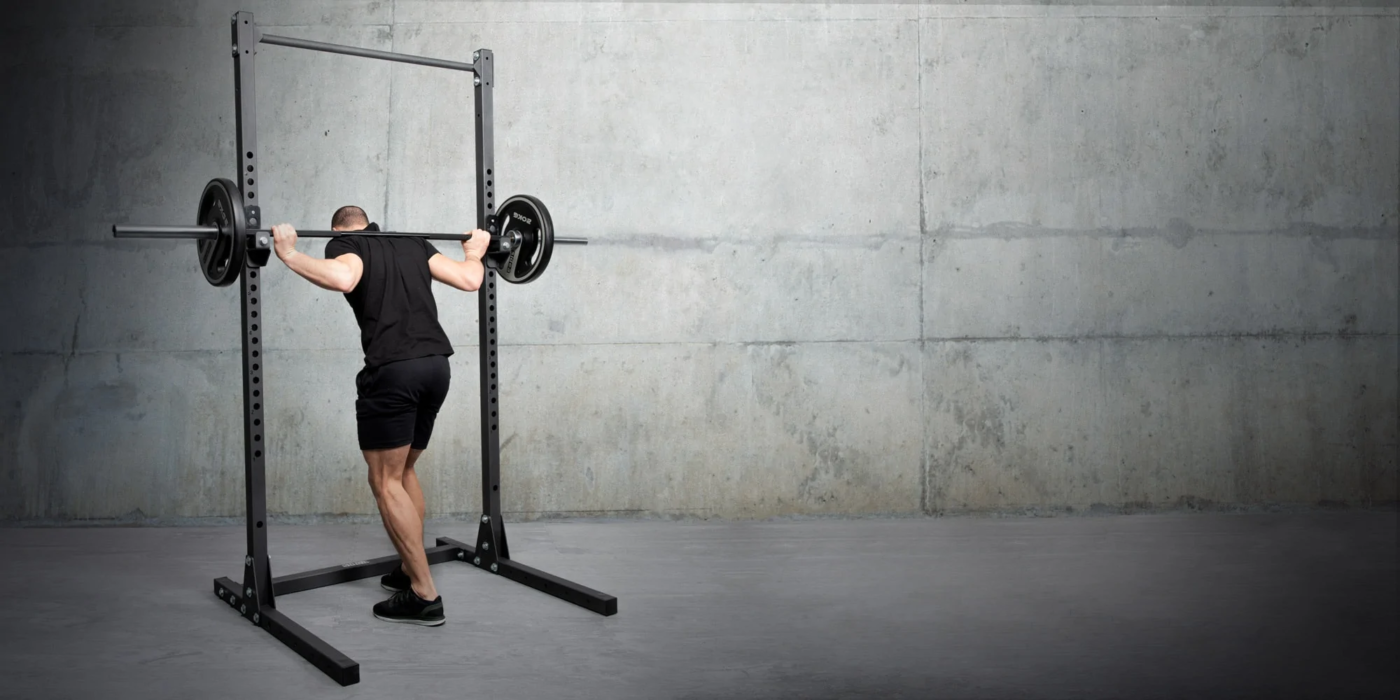
The 9098/1 Standing Rack Pro is designed to meet exactly this need.
It maintains a relatively compact footprint — approximately 1200 × 1110 mm — while offering a freestanding structure that can be used for squats, pull-ups and various strength training exercises, especially when paired with a bench.
It’s a particularly interesting solution when we’re looking for a balance between:
Footprint, stability and versatility.
Compared to the two 9045/1 barbell stands, we lose some of the ease of movement, but gain a single, more stable and complete structure.
It can therefore be an excellent fit for:
- Advanced home gyms.
- Personal training studios.
- Small strength training facilities.
- Individual training stations within a gym.
The principle is simple:
9045/1 if the priority is being able to free up the space.
9098/1 if the priority is having a compact yet stable training station.
When You Want to Train Inside the Rack: 9095 Power Cage
With a Power Cage, the way you use the structure itself changes.
The 9095 Power Cage Rack is a full cage featuring four uprights, adjustable barbell supports and the possibility of training both inside and outside the structure. The rack is freestanding, although SIDEA recommends floor anchoring whenever possible.
At this point, the rack is no longer simply a place to rest your barbell.
It becomes a fully-fledged training area.
This allows you to organize a wider range of exercises with greater flexibility:
- Squats.
- Bench press.
- Pull-ups.
- Military press.
- Strength training exercises.
- Additional accessory work.
For a professional weight room or a home gym where space can be permanently dedicated to training, the Power Cage represents one of the most complete and traditional configurations.
On the other hand, if every inch of depth matters or the room needs to be constantly reconfigured, it may be a more substantial structure than you actually need.
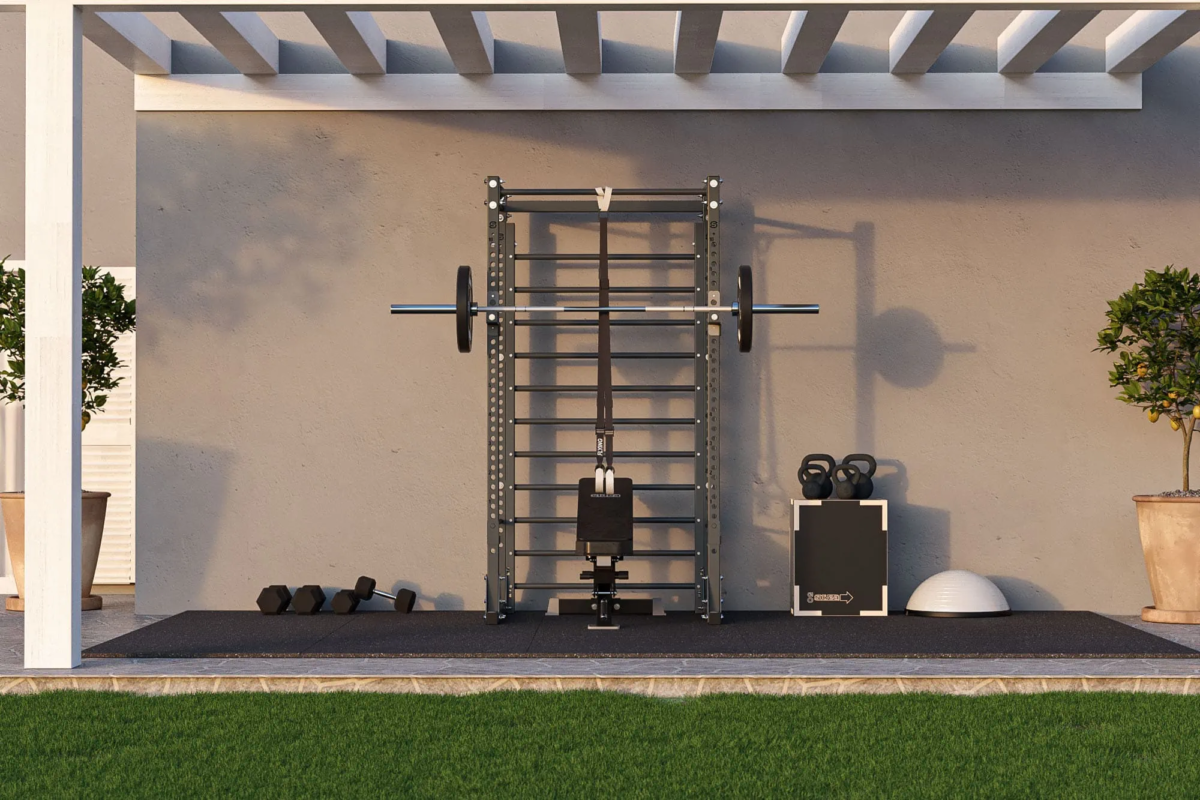
Intensive Professional Use: High Performance Rack
As usage frequency, the number of users and the need for customization increase, structural requirements change accordingly.
This is where the High Performance Rack range comes in.
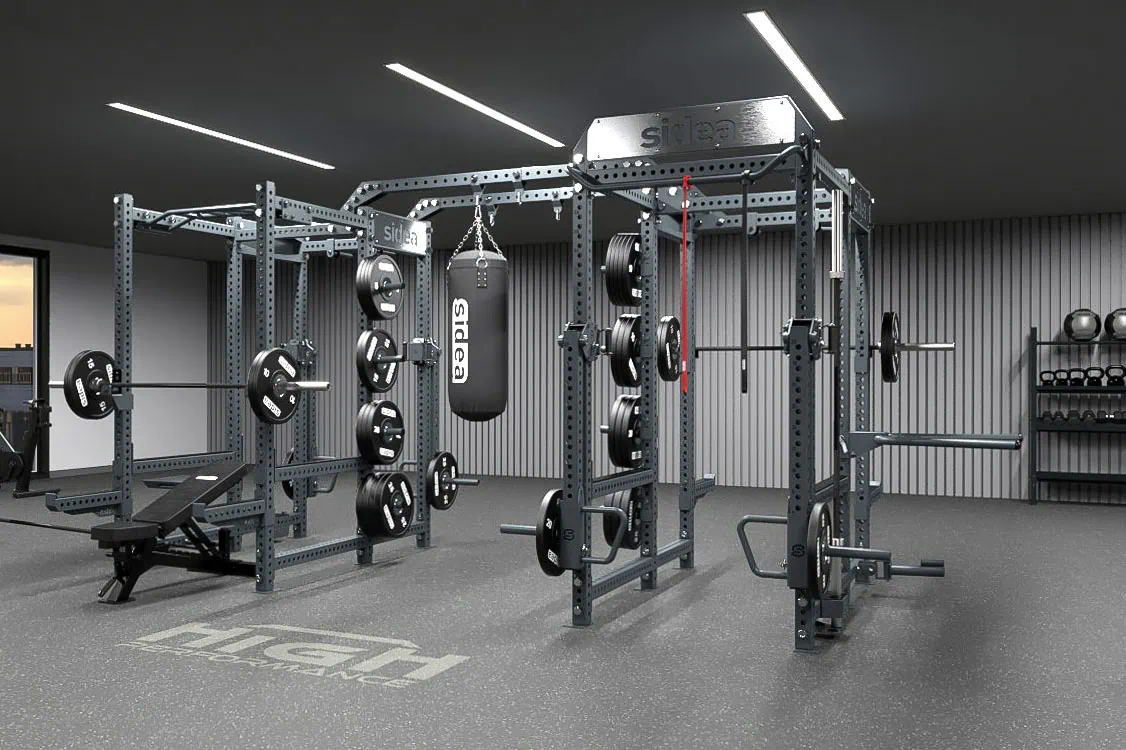
This product line is built around 80 × 80 mm uprights and is designed for intensive strength and power training. The structures can be customized with a wide range of components and accessories, making them suitable for gyms, training centers, personal training studios and different strength training disciplines.
The 9300M0 High Performance Cage Rack retains the full cage configuration and is equipped with J-Hooks and dedicated safety systems.
The 9300M8 H.P. Standing Rack, on the other hand, takes the standing rack concept to a more advanced professional level, incorporating numerous storage elements and accessories. In this case, floor anchoring is required.
These solutions make particular sense when the rack needs to be used repeatedly throughout the day and becomes an integral part of the training facility’s infrastructure.
For a basic home gym, however, they may simply offer more structure and modularity than is actually needed.
When a Rack Is No Longer Enough: 9080 and 9088 All-In-One Racks
So far, we’ve focused mainly on the barbell.
But there’s another question worth asking:
What if we also want cable systems and a Smith Machine in the same space?
This is where All-In-One Racks come into play.
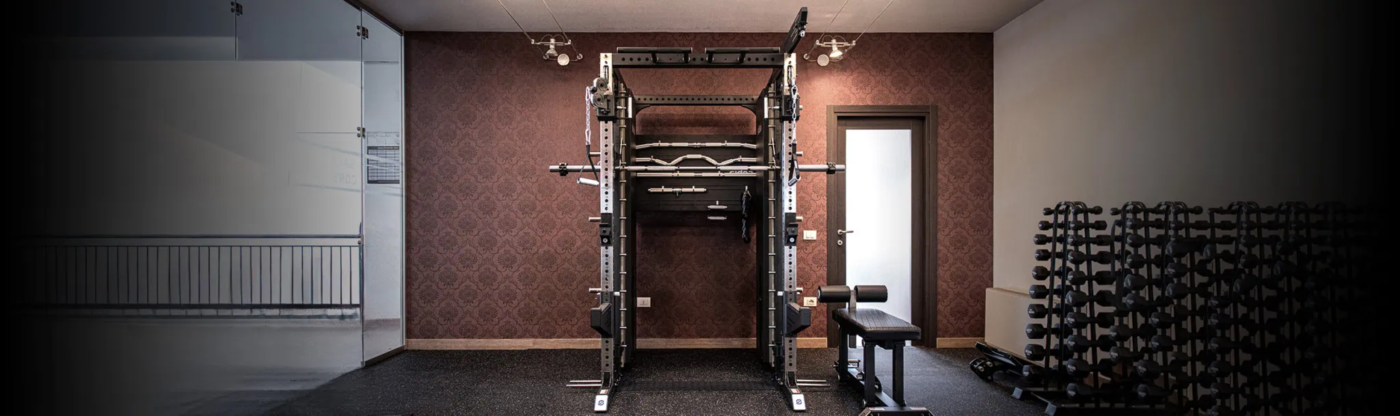
The 9080 All-In-One Rack combines a rack, a Smith Machine and cable systems in a compact structure designed for strength training, athletic performance and advanced home gyms. SIDEA particularly recommends it for gyms, personal training studios and spaces where multiple training options need to be brought together within a limited footprint.
The 9088 All-In-One Rack Premium takes the same concept to an even more professional level, featuring a more substantial structure and two integrated 90 kg weight stacks for its cable systems. SIDEA also identifies it as particularly suitable for commercial gyms with high user traffic, where quick weight adjustments and continuous use become important factors.
At this point, the question is no longer simply:
“Which rack should I choose?”
Instead, it becomes:
“Do I want a rack, or do I want to combine multiple training stations into a single structure?”
That’s a substantial difference.
Which Rack Should You Choose? A Quick Guide
The choice can be simplified by starting with your main requirement:
| Main requirement | Solution to consider |
|---|---|
| Minimal footprint and the ability to move the equipment | 9045/1 Olympic Bar Support Pro |
| Squats and bench presses as the main exercises | 9045 Powerlifting Rack |
| Limited depth and an available wall | 9095/16 Half Power Cage |
| Compact, freestanding structure | 9098/1 Standing Rack Pro |
| Full cage for strength training | 9095 Power Cage |
| Intensive professional use and high modularity | High Performance Rack |
| Rack + Smith Machine + cable systems in one station | 9080 / 9088 All-In-One Rack |
The Most Complete Rack Isn’t Always the Right One
One of the most common mistakes when designing a gym is starting directly with the product.
You see a highly versatile structure and automatically assume it’s the best choice.
In reality, the process should work exactly the other way around.
First, define:
- Available space.
- Number of users.
- Exercises to be performed.
- Frequency of use.
- Installation and anchoring possibilities.
Then choose the rack.
Sometimes the answer will be a Power Cage.
Sometimes an All-In-One.
Sometimes a High Performance structure.
And in some cases, the best choice will simply remain two independent barbell stands that can be moved into a corner once the workout is over.
The SIDEA range includes very different structures precisely because the environments and people using them have different needs: from Smart Racks to Rack Stations, from High Performance systems to All-In-One solutions.
True gym design isn’t about fitting as much equipment as possible into a room.
It’s about putting the right equipment in the right place.
Need Help Choosing the Right Rack?
If you’re planning a home gym, a personal training studio, a strength training area or a professional gym, you can start with just three simple pieces of information:
- Available floor space.
- Ceiling height.
- Type of training you want to perform.
Based on these details, it’s possible to determine whether a mobile solution, a Standing Rack, a Power Cage, a High Performance structure or an All-In-One system makes the most sense.
The goal isn’t to choose the biggest rack.
It’s to design a training station that will actually be used, every day, for the purpose it was designed to serve.