






Before You Push, You Need Something to Push Against
Before strength comes support.
It is an apparently simple, almost obvious concept. Yet it describes one of the most interesting principles of human movement.
In bioenergetics, Alexander Lowen used the term grounding to describe an individual’s relationship with the ground through their feet. The meaning Lowen attributed to the term belonged primarily to the psychocorporeal sphere rather than to the modern biomechanics of sport. Nevertheless, the image it evokes is compelling: the foot represents the point at which our body encounters something that does not move with us, yet allows us to move.
The ground.
When we walk, run, jump, throw, or lift a weight, this interaction also takes on a strictly mechanical significance. What may seem like nothing more than a point of support becomes a fundamental condition for organizing movement.
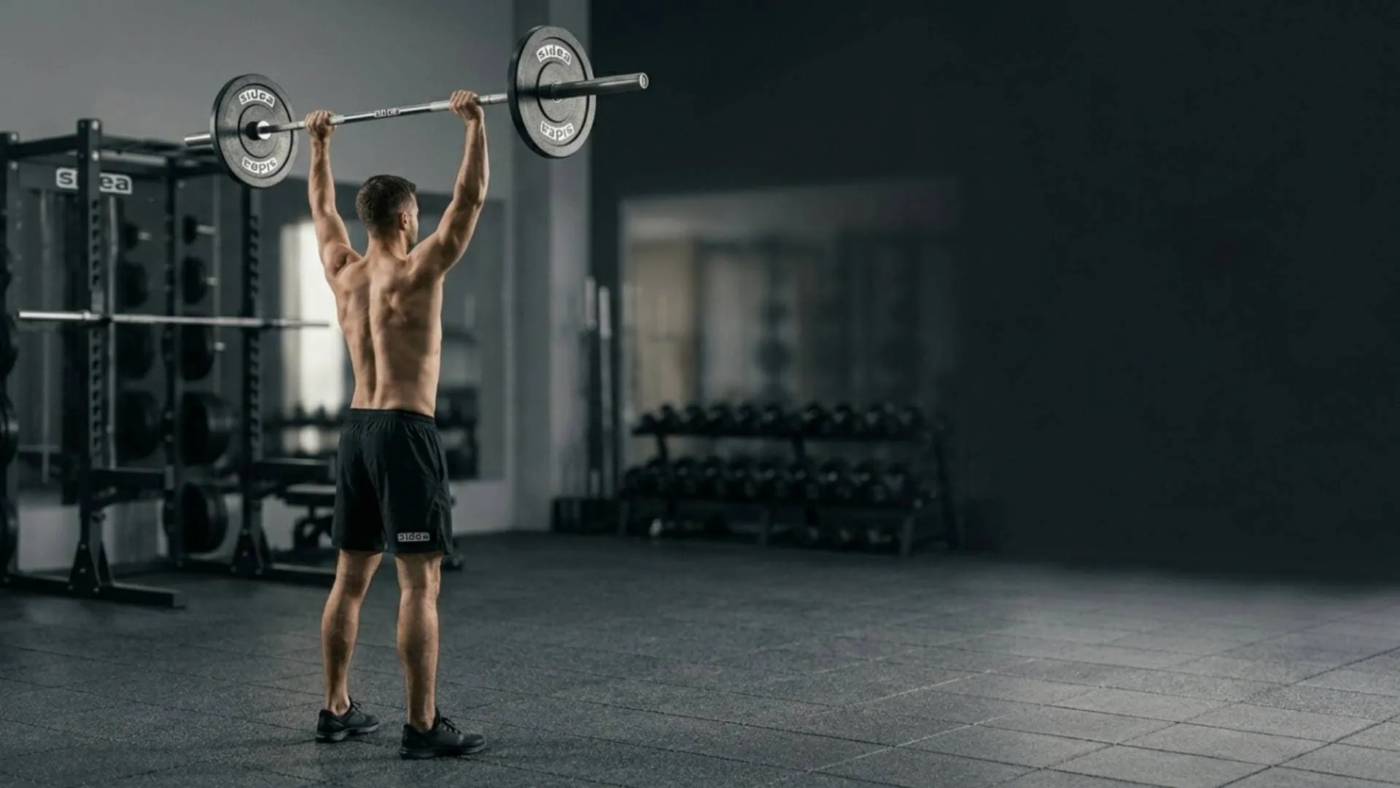
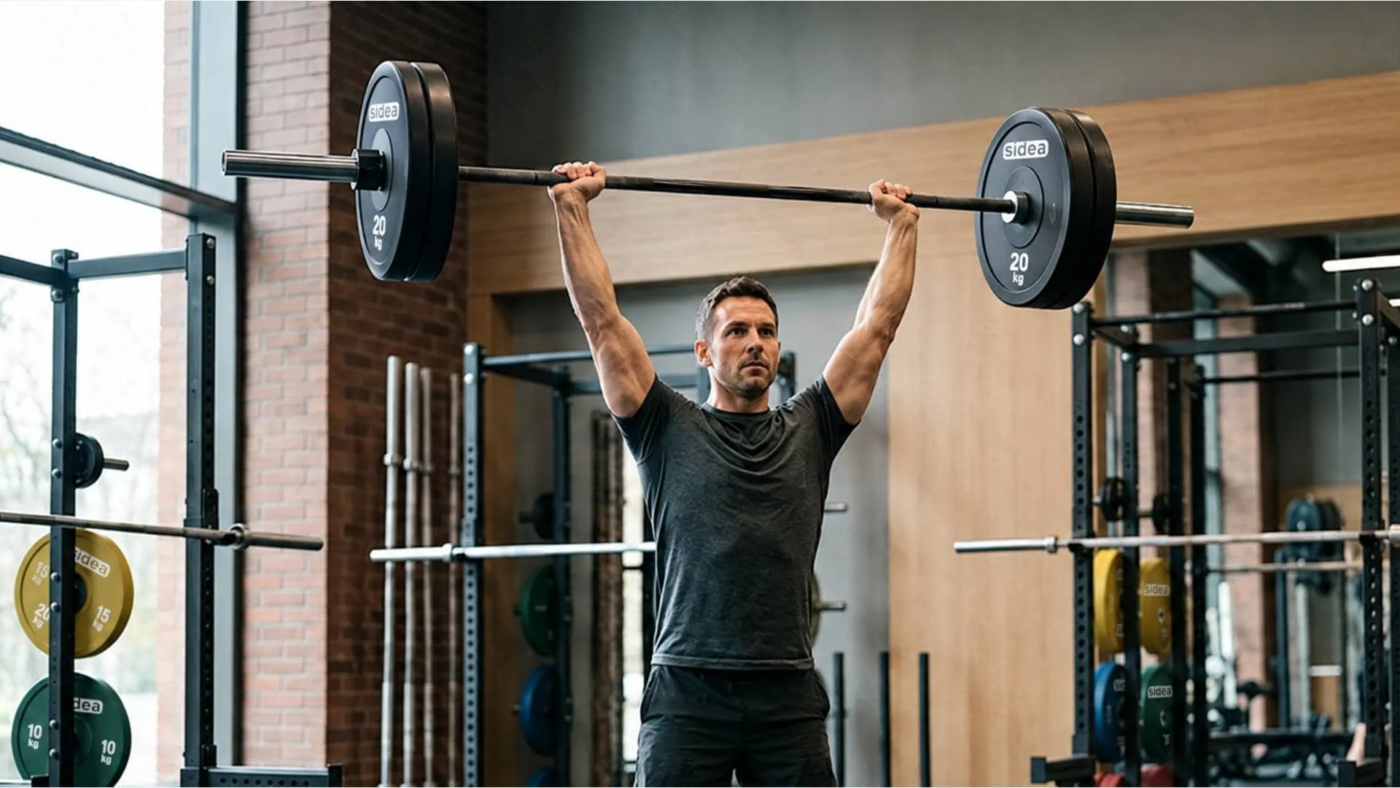
Consider the Military Press.
We have a barbell in front of our shoulders, and we want to press it overhead.
Instinctively, we focus on the arms. The deltoids, triceps, and trapezius. After all, these are the muscles primarily responsible for generating the force that moves the barbell and, therefore, for producing the external mechanical work we observe.
But let’s mentally trace our way down the body.
From the hand to the shoulder.
From the shoulder to the trunk.
From the trunk to the pelvis.
From the pelvis to the legs.
From the legs to the feet.
And finally, from the feet to the floor.
At this point, an interesting question emerges:
How effective can the force generated by the arms be if everything beneath them is unable to support it?
The answer takes us beyond the individual muscle and into one of the fundamental concepts of biomechanics: the force we observe at the end of a chain also depends on the ability of the entire system to create the conditions necessary for that force to be expressed.
The Military Press Is More Than Just a Shoulder Exercise
Classifying the Military Press as a “shoulder exercise” is correct from a practical standpoint, but incomplete from a biomechanical perspective.
In the strict standing press, the upper limbs are primarily responsible for accelerating the barbell sufficiently to overcome gravity.
Unlike the Push Press, the legs are not required to deliberately generate the propulsive phase through rapid hip and knee extension.
And yet, they are working.
The trunk should not undergo any pronounced flexion or extension.
And yet, it is working.
The feet appear to be doing nothing.
And yet, they are the point through which the entire system interacts with the ground.
Indeed, the literature on overhead pressing derivatives describes the standing press as an exercise in which, while the upper-body musculature produces the movement of the load, the trunk and lower body contribute to the stability required for its execution [1].
This distinction is fundamental.
Not all the muscles involved in a movement must necessarily produce the movement we see.
Some have an equally important task:
preventing movements we do not want to occur.
To Move Something, Something Else Must Remain Stable
Imagine having to push against a very heavy door.
With your feet firmly planted on the ground, you can organize your body, brace your trunk, and effectively transfer your effort against the door.
Now imagine the same situation with your feet on an extremely unstable surface.
Your muscular capabilities have not suddenly disappeared.
Your pectorals are the same.
Your triceps are the same.
Your shoulders are the same.
And yet, your ability to effectively apply force against the door changes.
Some of the system’s resources must now be devoted to controlling instability.
This principle has also been widely observed in the resistance training literature: conditions of greater instability can increase stabilization demands while simultaneously reducing the force, power, or velocity that can be expressed externally [2–4].
The point, therefore, is not simply to have muscles capable of producing a great deal of force.
It is also necessary to have a structure capable of managing that force.
And this is where the Military Press becomes particularly interesting.
-
The Foot: Where the Body Meets the Outside World
The foot constitutes the support base of the system.
But simply saying “you need to maintain balance” does not do justice to what is actually happening.
Even when a person appears perfectly still, their body is not truly motionless.
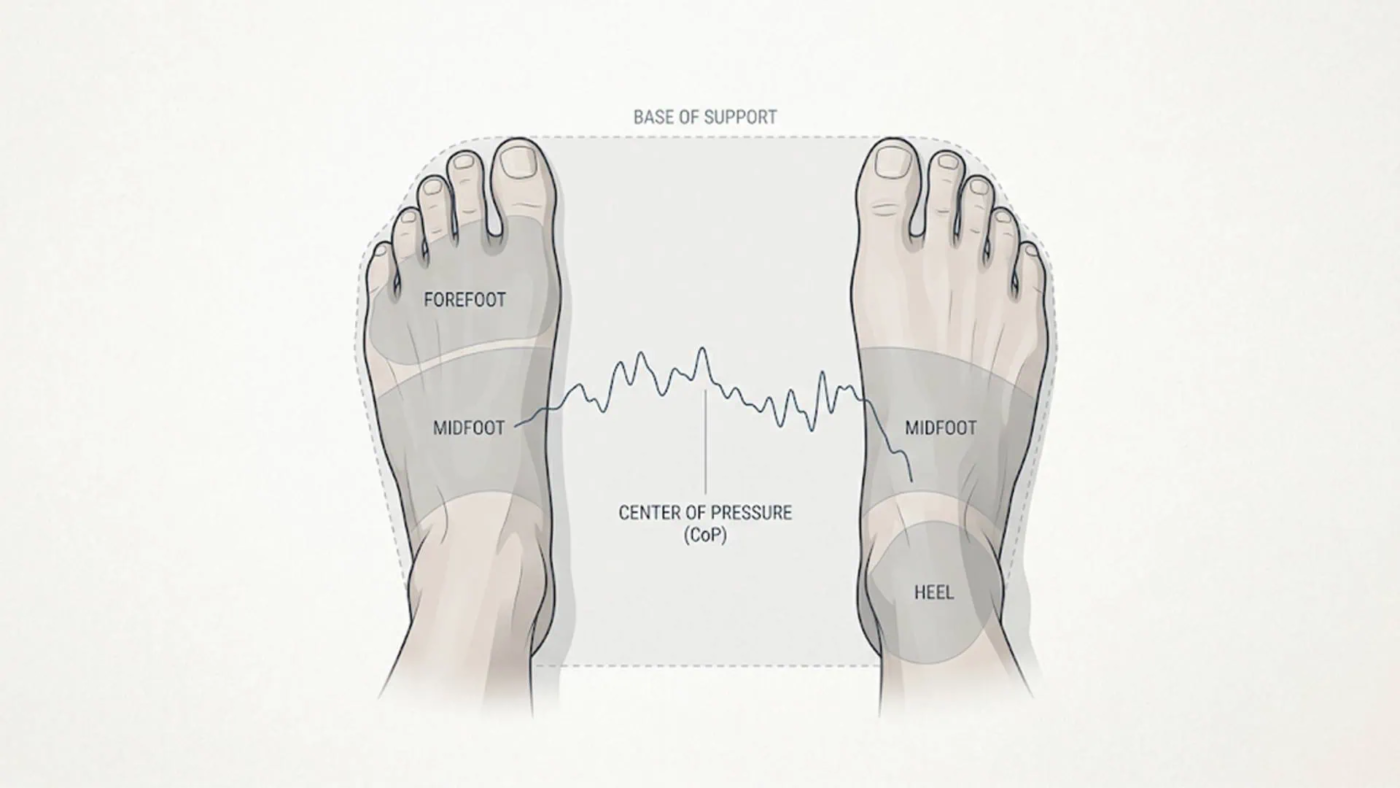
The Center of Mass (CoM) and the Center of Pressure (CoP) are involved in a continuous process of postural control. The CoP, which can be measured using force platforms, represents the resultant of the interaction of forces exerted against the ground and is widely used in the study of balance [5,6].
In other words, when we stand upright, our system is already working to prevent us from falling.
Now let’s put a barbell in our hands.
And have the person move that load from the front of the shoulders to a position directly overhead.
The overall configuration of the body + barbell changes.
The system must continuously adapt.
Lifting a load therefore represents an internal perturbation of balance, to which the body responds by modifying the organization of ground reaction forces and its postural control strategy [7].
The Military Press does not take place on a passive support base.
It takes place thanks to a system that continuously regulates its relationship with that base of support.
Forefoot, Heel, and the Subtle Search for Center
Let’s return to the feet.
During a Standing Barbell Overhead Press, NSCA technical literature recommends keeping the body rigid and balance organized predominantly over the midfoot, avoiding a pronounced shift toward the toes [8].
This does not mean that plantar pressure must remain mathematically motionless at a single point.
That would be physiologically unrealistic.
The body sways. It corrects. It anticipates. It compensates.
Stability is dynamic.
But imagine that, during a heavy repetition, the system gradually begins to shift too far toward the forefoot.
The available margin at the front of the foot for managing further perturbations decreases. The body must adjust its configuration to keep the center of mass controllable relative to the base of support.
If, on the other hand, we shift excessively toward the heel, the problem arises in the opposite direction.
The goal, therefore, is not to find some mythical “perfect point” on the foot where all the pressure should be concentrated.
It is to create a sufficiently balanced and controllable base that allows the rest of the kinetic chain to do its job.
And this is where the evocative concept of grounding, which we started with, takes on an intriguing mechanical parallel, without confusing the two meanings:
Before we can control what we hold overhead, we must control the point through which we connect to the ground.
-
We can schematically represent the system:
GROUND
↓
FOOT
↓
ANKLE
↓
KNEE
↓
HIP
↓
PELVIS
↓
TRUNK
↓
SHOULDER GIRDLE
↓
SHOULDER
↓
ELBOW
↓
HAND
↓
BARBELL
This representation does not mean that the force in the Military Press is “generated by the ground” and magically transmitted all the way to the barbell.
That would be an excessive simplification.
It means something more interesting.
Each segment must create mechanical conditions compatible with the task of the next segment.
The literature on the kinetic chain, particularly well developed in the study of overhead athletes, describes precisely the need to coordinate different segments so that the production, transfer, and control of forces occur effectively throughout the system [9,10].
In the Military Press, we can observe this principle in a particular form.
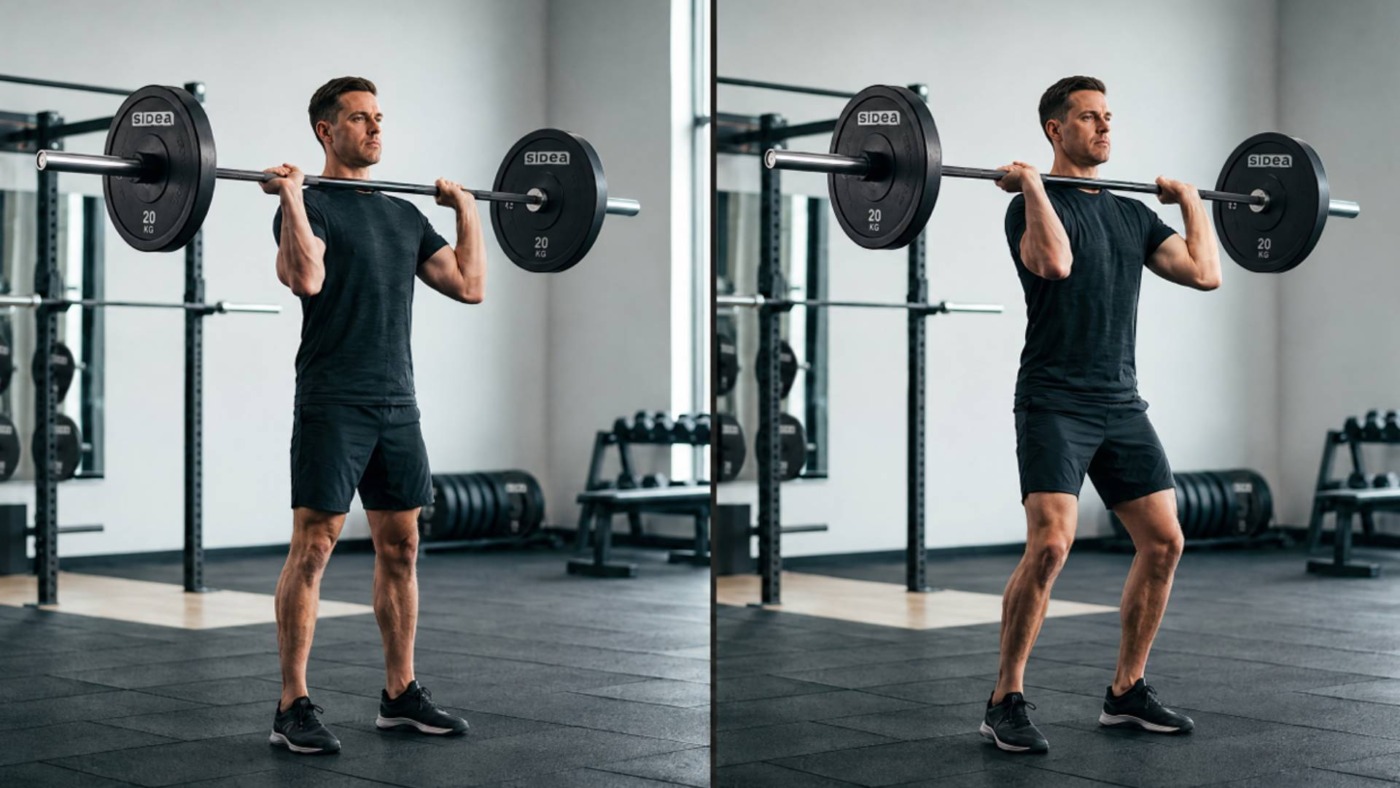
The legs do not necessarily have to accelerate the barbell.
Above all, they must prevent the base on which the trunk rests from becoming inefficient.
The core does not have to lift the barbell.
It must create a sufficiently stable condition so that the force developed further along the chain can be applied without being dispersed into unwanted trunk movements.
The scapular complex must, in turn, create the conditions for the action of the humerus.
And finally, the hand and the barbell represent the visible end of the system.
-
Military Press and Push Press: Two Different Ways of Using the Ground
The comparison with the Push Press makes the concept even clearer.
In the Push Press, the lower limbs actively contribute to propulsion.
A rapid flexion followed by extension of the hips and knees contributes to the impulse that is transferred toward the barbell through the kinetic chain [1].
In the Military Press, this propulsive contribution is intentionally excluded.
But excluding leg propulsion does not mean eliminating their contribution.
It means changing their function.
We can summarize it as follows:
In the Push Press, the legs contribute directly to accelerating the barbell.
In the Military Press, they contribute primarily by creating the conditions that allow the upper body to accelerate it.
It is a subtle but fundamental difference.
And it makes the strict press almost a biomechanical experiment in stability.
The heavier the load above us becomes, the more evident the importance of what lies beneath us.
The Force We See and the Stability We Don’t
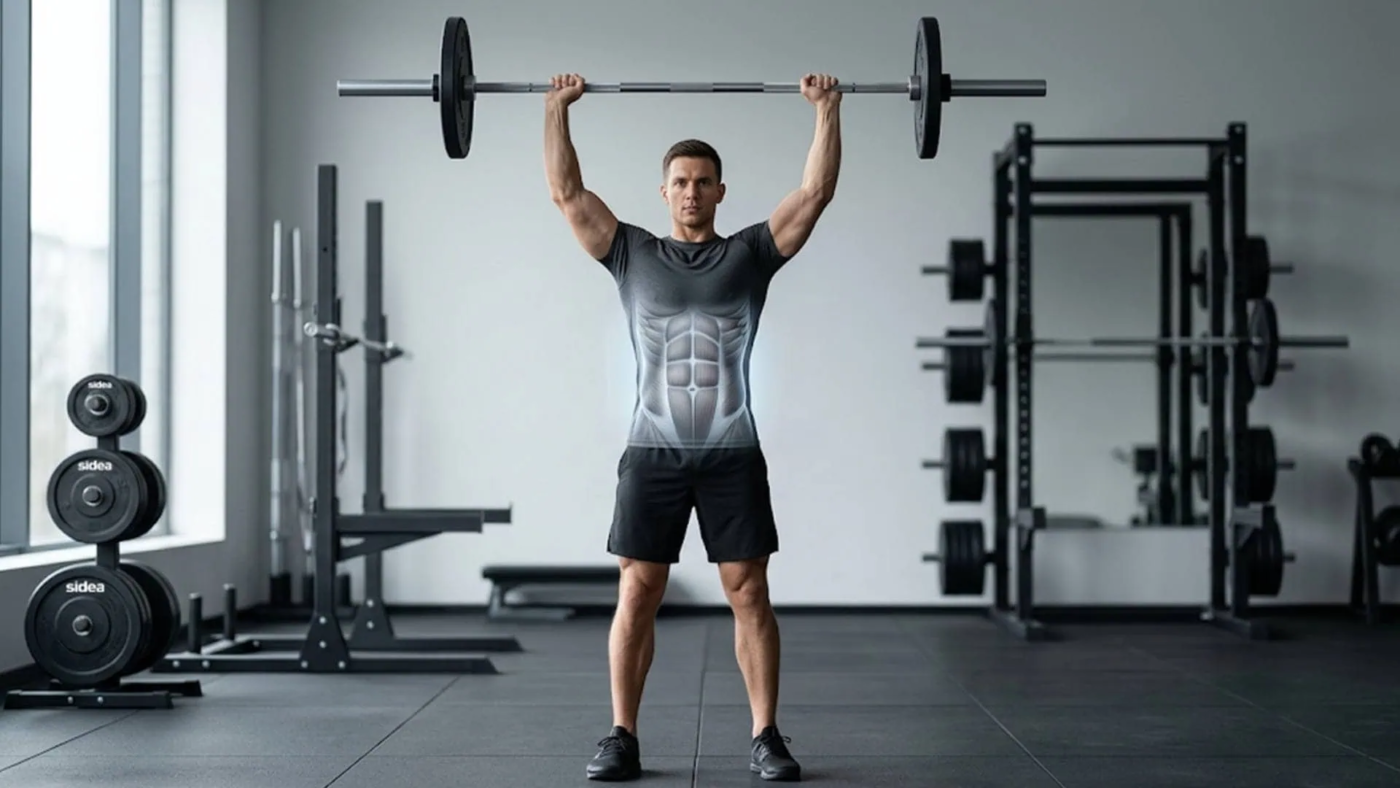
When we observe an athlete performing a heavy Military Press, our attention is inevitably drawn to the barbell.
It either goes up or it doesn’t.
That is the visible result.
But beneath that barbell, an enormous amount of work takes place that we can hardly observe.
The foot manages the relationship with the ground.
The ankle, knee, and hip contribute to controlling the base.
The pelvis must be controlled.
The trunk creates stiffness.
The shoulder girdle organizes the overhead movement.
The elbow extends.
The hand transfers force to the barbell.
There is only one repetition, but the system that produces it is the entire body.
And perhaps this is the limitation of observing human movement exclusively through the muscles that produce the most obvious movement.
The deltoid can be extremely strong.
The triceps can be extremely strong.
But neither of them works in a vacuum.
Their force is expressed within a structure.
“A chain is only as strong as its weakest link.”
Returning to the Ground
We can now return to the image from which we started.
Lowen’s concept of grounding belonged to a different discipline and served different purposes. We do not need to retroactively transform it into a biomechanical principle.
We can, however, preserve its evocative imagery.
Being rooted.
Being aware of our contact with the ground.
Because in sport, the ground is not simply what prevents our body from falling downward.
It is the physical boundary against which we can organize our actions.
The foot meets the ground.
The ground reacts.
The system controls that relationship through continuous adjustments.
And on top of that base, we can run, jump, throw, pull, or push.
Until we bring a barbell overhead.
Perhaps, then, when we observe a Military Press, we should stop looking at the barbell for a moment.
Move down along the arms.
Across the shoulders.
The trunk.
The pelvis.
The legs.
All the way to the feet.
Because the force we express through our hands also depends on the ability of the entire body to support it.
And before asking our body how much it can push, it might be useful to ask:
How well can you support that push?
Ultimately, the purpose of these pages is not to talk about the Military Press.
The Military Press is merely a pretext for observing something broader: the way the body organizes itself to produce an action.
Because the body is not a sum of parts, but a system of relationships. And what we see — the barbell rising — is only the final outcome of what the body has managed to organize beforehand.
Perhaps that is precisely the point: to stop looking only at the result and learn to observe the conditions that make it possible.
Performance, then, is not simply what the body manages to do, but how it manages to organize itself to do it.
Move smarter. Get stronger. Live better.
In Summary
The strict Military Press requires integrated stability: the feet manage the plantar center of pressure, the core creates lumbopelvic stiffness, and the lower body provides a controllable base while the upper body accelerates the barbell. Studies (Saeterbakken 2013, An 2025) show that instability increases neuromuscular activation but reduces maximal load.
Biomechanical analysis by Michael Maraldi for Sidea, distributor of StrongFirst Italy.