







The Art of Integration: When to Build Strength and When to Manage It
In the world of professional physical preparation, SIDEA has always upheld a clear principle: strength is not just a matter of load, but of control, quality, and transferability of movement. To design equipment is to design motor possibilities. And to design motor possibilities is to understand how the body produces and manages force.
It was precisely on this ground that Serena Dalle Palle’s presentation at the StrongFirst Summit of Strength 2026 unfolded. This international event took place in Cesena on January 31st and February 1st, 2026, bringing together coaches, strength trainers, and movement professionals from all over Europe.
The title of her talk – “Pushing and Pulling Patterns: SAS and BAS Integration” – may seem technical. In reality, it addresses one of the most central themes in modern strength programming: the relationship between Bent Arm Strength (BAS) and Straight Arm Strength (SAS).

Straight Arm Strength and Shoulder Health: The Key Role of the Scapula
One of the most technically interesting parts of Serena’s talk concerned the concept of Scapular Strength.
In Straight Arm Strength, the scapular complex becomes the control center of the movement. The force is no longer concentrated exclusively in the large prime movers (latissimus dorsi, pectoralis major), but is distributed among smaller stabilizers that are often neglected in traditional training, such as the middle/lower trapezius and the serratus anterior.
This has two fundamental implications for coaches and personal trainers:
- The development of SAS takes time, because the small stabilizers must adapt to new loads and tensions.
- The integration of SAS improves shoulder health by reducing imbalances between large prime movers and stabilizers.
In a context where anterior shoulder pain, impingement, and overload are extremely common, including straight-arm work in the weekly program is not an aesthetic choice. It is a strategic choice.
Biomechanical Differences: Short Lever vs. Long Lever
From a technical point of view, the differences between BAS and SAS are clear.
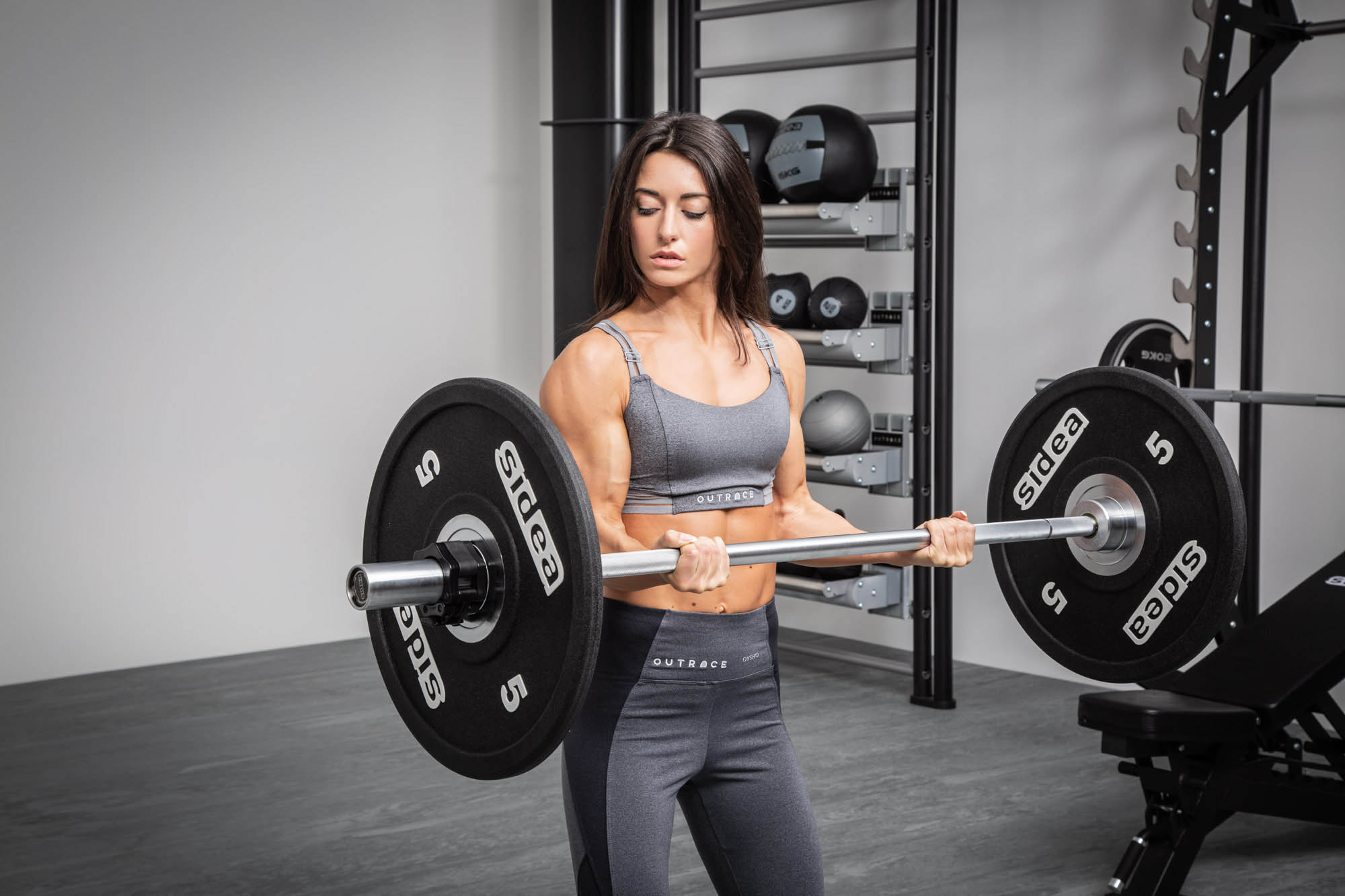
Bent Arm Strength
- Short lever → greater ability to express absolute force
- High metabolic demand
- Pattern is easier to learn
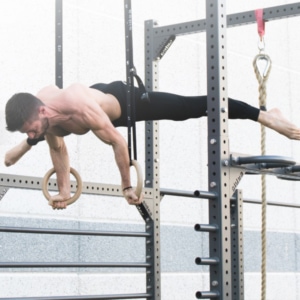
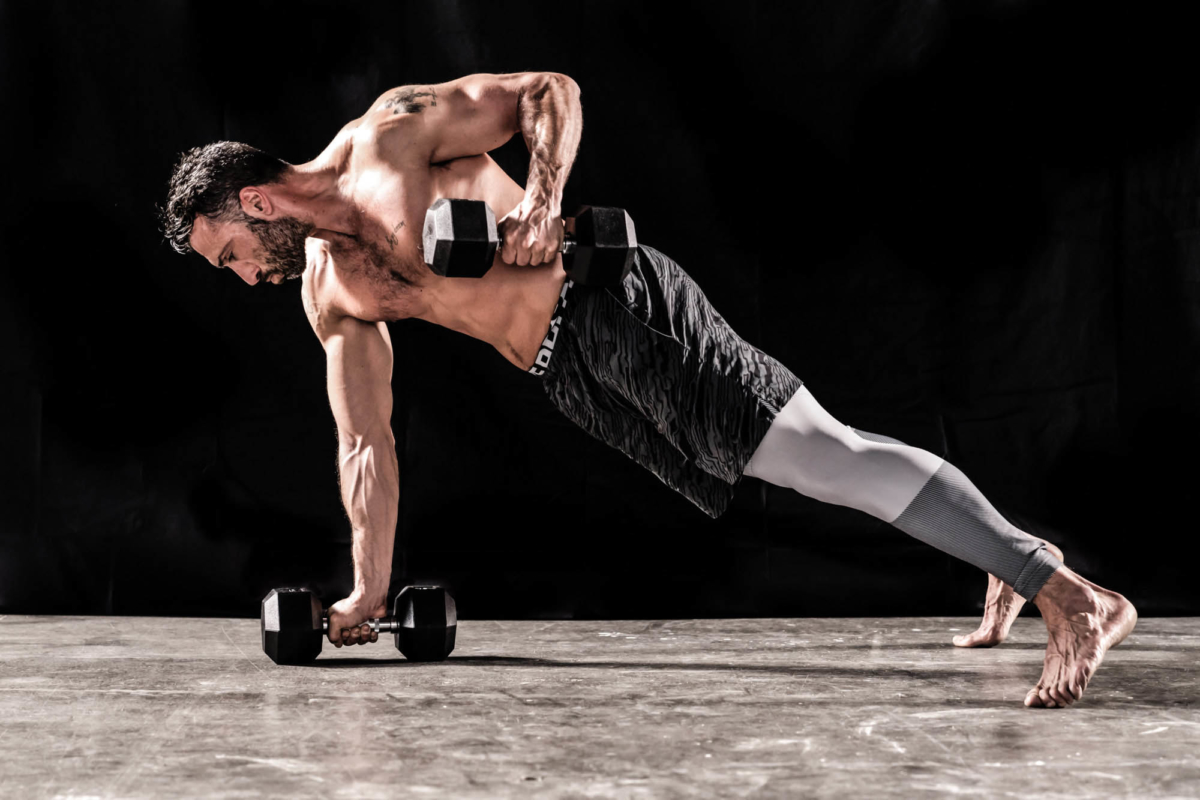
Straight Arm Strength
- Long lever → greater joint stress
- High demand for scapular and core control
- High neural demand
Understanding these differences is fundamental for proper strength training programming, especially in a professional setting.
It’s not about making exercises “harder,” but about progressing on precise variables: leverage, alignment, time under tension (TUT), and control.

Strength Programming: Quality Before Fatigue
Another central point of the talk concerns the organization of the micro and macro-cycle.
Bent Arm and Straight Arm are not alternated randomly.
Their distribution depends on four key variables:
- the subject’s level;
- the goal of the phase;
- joint tolerance;
- motor control capacity.
Among the proposals that emerged were:
- A 5-day structure with the barbell as a priority and complementary SAS (high frequency, high volume);
- A 4-day structure with priority on SAS and the barbell in maintenance (high quality, high recovery);
- Monthly cycles with phases of technical accumulation, integration, and consolidation.
A particularly relevant concept for those who work with barbells and heavy loads: straight arm strength should not be taken to failure and should not compete with the big lifts.
The organization is for quality, not for fatigue.
This principle is extremely consistent with a professional approach to strength & conditioning: fatigue is a tool, not a goal.
Skill before Strength: Skill First, Then the Load
A part that aroused great interest was the principle: “Skillwork before Strengthwork”.
Complex skills – handstands, advanced supports, levers – must be trained before traditional strength work.
This means technical blocks of 10–20 minutes in a controlled manner, with a neural focus, and attention to alignment.
Only afterward do you move on to sets and repetitions with external loads.
Because strength, especially in professional contexts, is not just mechanical output. It is coordination. It is control. It is economy of movement.

The Manifesto of Strength Architecture
The conclusion of the talk was summarized in three sentences that represent a true declaration of method:
- Bent Arm Strength builds strength.
- Straight Arm Strength teaches how to manage it.
- A good program doesn’t choose; it integrates.
Apply logic, not chance.
A message that resonates deeply with the SIDEA philosophy: equipment is a tool, but it is the programming that transforms it into a result.
What This Means for Coaches, Personal Trainers, and Gyms
For those working in the world of professional fitness, functional training, and athletic preparation, the takeaway is clear:
- Integrating bent-arm and straight-arm work improves overall performance.
- It improves joint health, particularly of the shoulder.
- It increases the transferability of strength towards advanced skills.
- It builds more complete and resilient athletes.
In a constantly evolving industry, where the search for new stimuli sometimes risks replacing logic with fads, Serena Dalle Palle’s presentation at the Summit of Strength 2026 brought the focus back to what really matters:
A strong body is not the one that moves the most weight, but the one that manages and masters it best.
When programming becomes the architecture of movement, strength is not just power. It is quality. It is control. It is sustainable performance over time.

The Speaker: Academic Expertise and Field Experience
Serena Dalle Palle’s presentation does not stem from isolated theoretical reflection, but from a structured professional and sporting journey.
As a contract university lecturer at the University of Padua in the Degree Course in Motor and Sports Activities Sciences, Serena leads theoretical-practical courses on Functional Training. Her academic work is complemented by extensive training activities for movement technicians, athletic trainers, and fitness industry professionals, through workshops, seminars, and specialized courses.
Her approach integrates strength, mobility, and motor control, with a constant focus on injury prevention, re-athletization, and performance improvement. Over the years, she has held technical responsibility roles as an athletic trainer and head of the functional training area, consolidating a method that combines scientific soundness with practical application.
A former competitive freestyle wrestler, Italian vice-champion in 2001 and 2002, she brings the direct experience of competition and real-world load management to her training vision.
It is precisely this synthesis of university, field, and competitive sport that makes her contribution to the Summit of Strength 2026 particularly fitting with an advanced vision of professional physical preparation.