


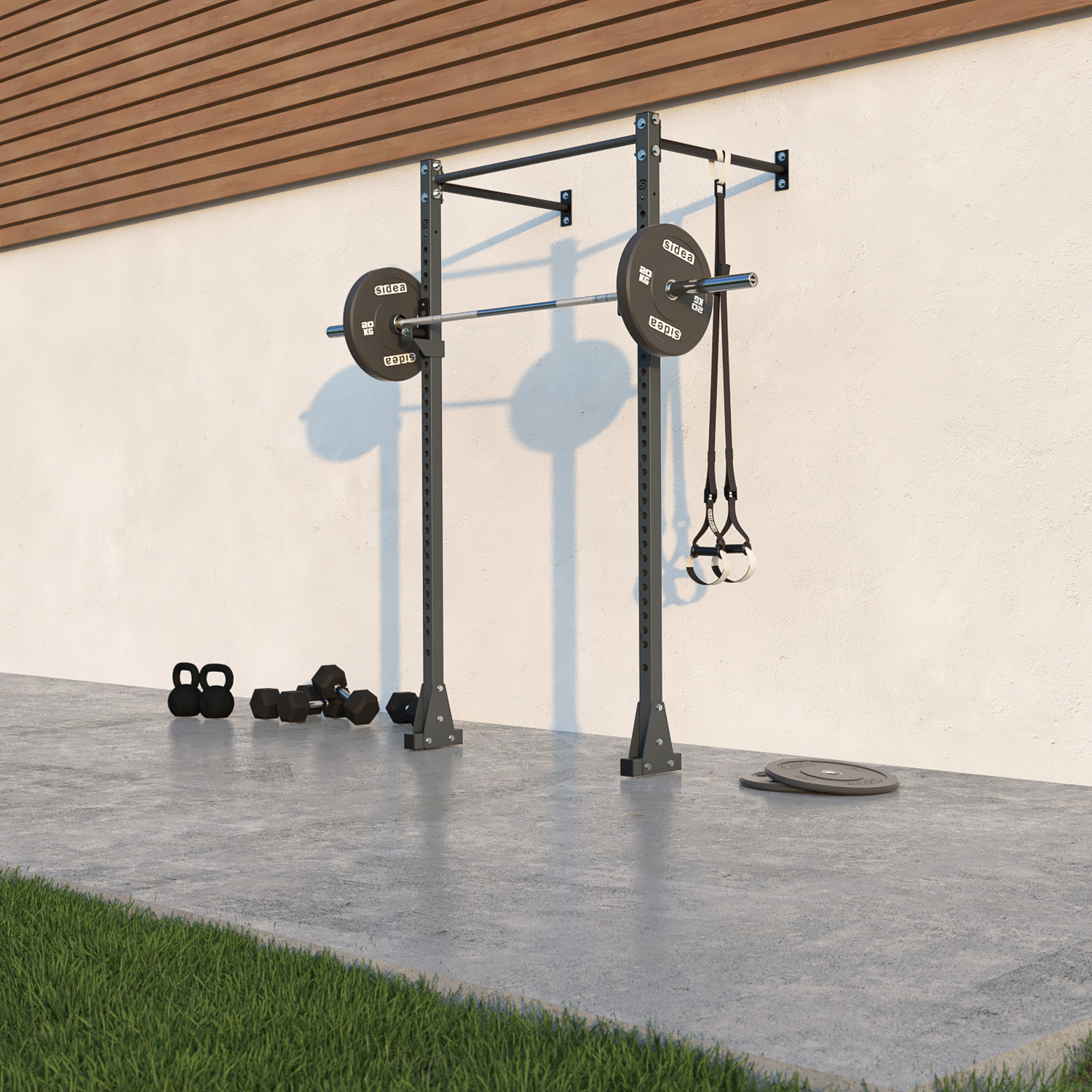



The truth that nobody tells you? Choosing a bumper plate is not just a matter of kilograms. It is biomechanics, center of gravity, and training strategy. If you think that “after all, they are all round and black,” get ready to discover why the thickness of your 9046/1 compared to the 9046/3 can transform a Hyrox sled pull/push into a completely different exercise.
Why Choosing a Bumper Plate is a Science, Not a Detail
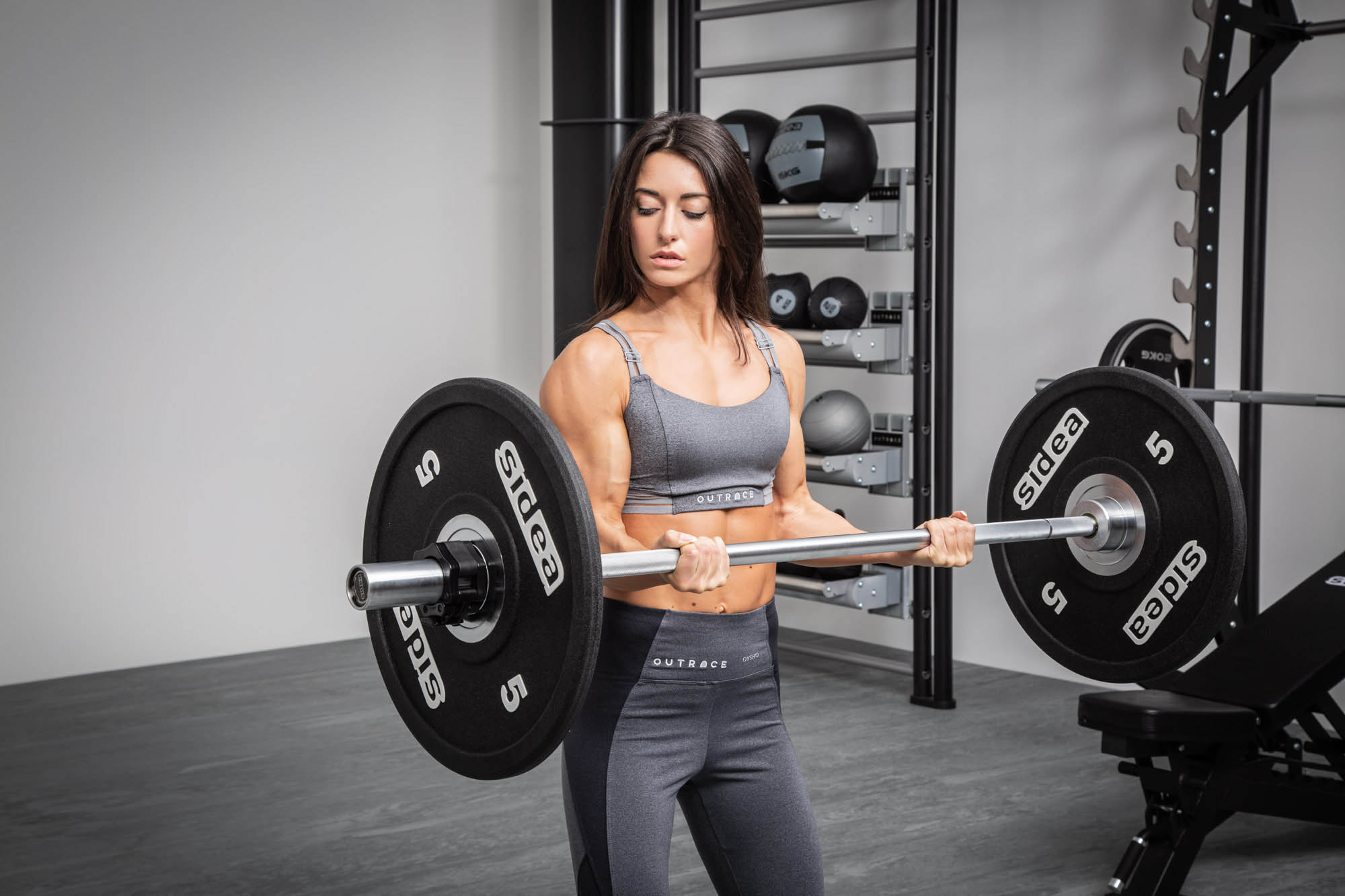
Bumper plates are born for a precise reason: to allow the controlled release of the barbell to the ground without destroying the floor, the equipment, and your joints. However, their evolution has generated product families with deeply different mechanical behaviors, densities, and thicknesses.
The crucial difference? Thickness at the same weight. A 20 kg recycled rubber disc (Crumb Rubber) can take up twice as much space on the barbell compared to a polyurethane (PU) disc. And this changes everything: the center of mass shifts vertically, the equipment’s center of gravity varies, and the exercise responds differently to your muscles.
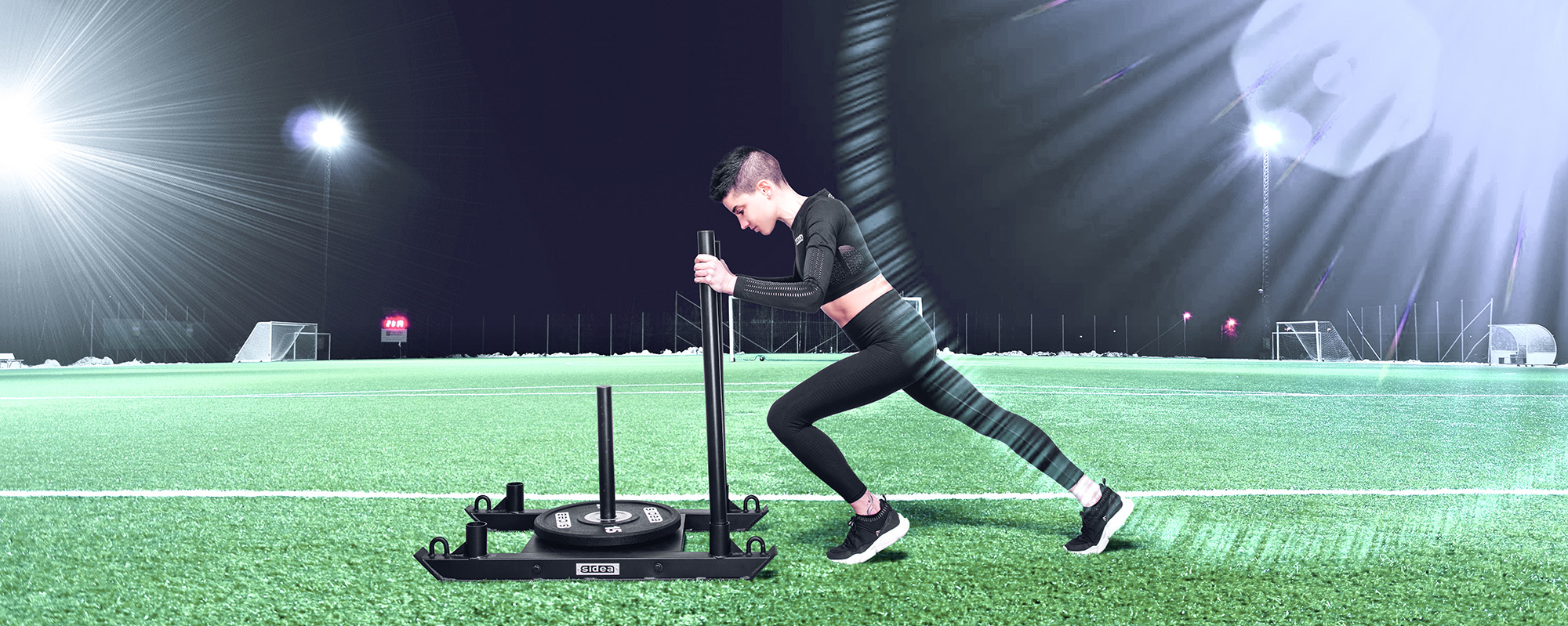
The Secret of the Center of Gravity: Practical Example on a Hyrox Sled
Imagine loading a sled for a Hyrox or strongman-style workout:
- Configuration A: you use 9046/1 Rubber Bumper plates (black rubber, high thickness). The weight is distributed over a larger volume, pushing the center of gravity upwards. The sled will tend to “tilt” or balance differently during the push.
- Configuration B: you use 9046/3 PU Bumper Plate discs. At the same 25 kg, the thickness is drastically reduced thanks to the high density of polyurethane. The center of gravity lowers, the sled becomes more stable, “planted” to the ground, and the pushing angle changes significantly.
The result? The exact same total weight, yet a biomechanically different exercise. If your goal is transferability to competition, the choice of thickness is not aesthetic: it is performance.
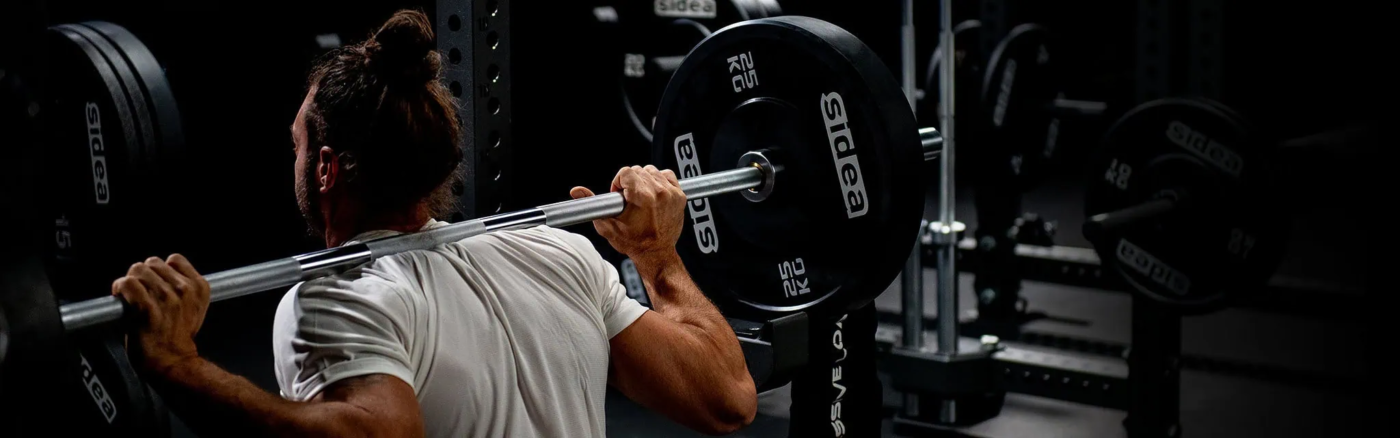
The 6 Bumper Plates in the Sidea Catalogue: Technical Datasheet and Intended Use
Here is the comparative analysis of the plates in the catalogue to help you make an informed decision.
9040/1 – 9046/1 Black Rubber Bumper Plate: The Workhorse
- Material: Solid synthetic rubber with steel inner ring
- Weight sizes: 5, 10, 15, 20, 25 kg
- Thicknesses (approximate): 5 kg = 24 mm | 10 kg = 42 mm | 15 kg = 60 mm | 20 kg = 70 mm | 25 kg = 82 mm
- Outer diameter: 450 mm | Bore: 50 mm
- Pros: Best value for money, good shock absorption, versatile for CrossFit and functional training
- Cons: Greater wear over time compared to PU, slight initial rubber smell, high thickness that limits the maximum load on the barbellWho it is for: Anyone setting up their home gym space or box and looking for a complete set without compromising their budget.
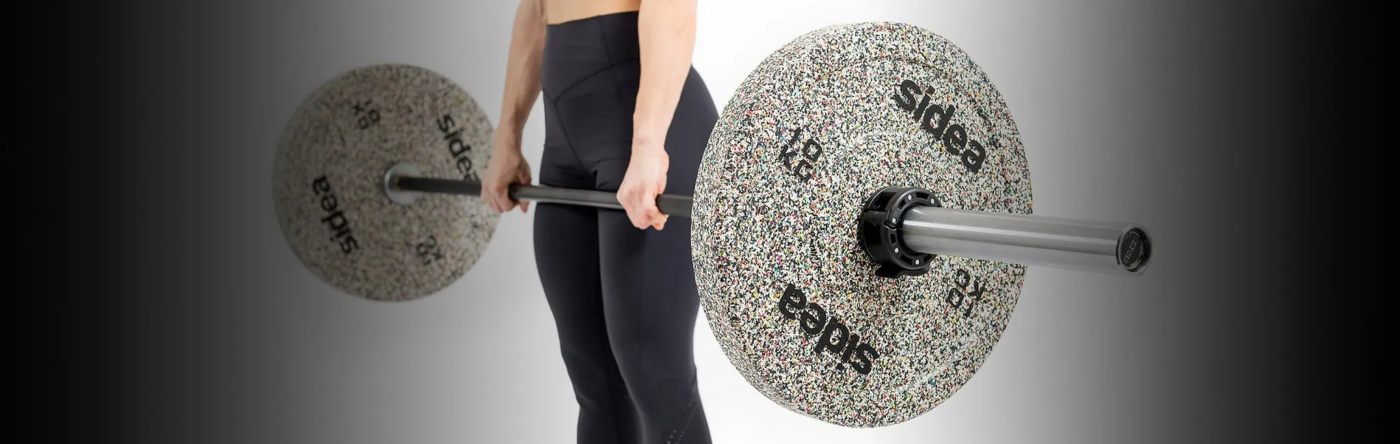
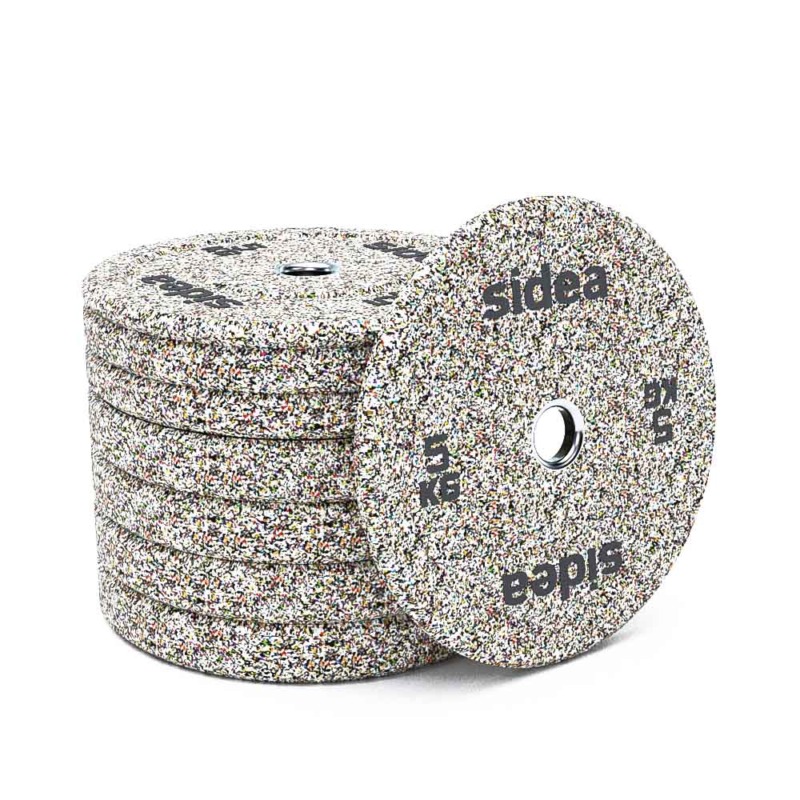
9040/7 – 9044/7 Crumb Rubber Bumper Plate: The Eco-Compact
- Material: Recycled rubber (crumb rubber)
- Weight sizes: 5, 10, 15, 20 kg
- Thicknesses: 5 kg = 32 mm | 10 kg = 57 mm | 15 kg = 67 mm | 20 kg = ≈ 77 mm
- Pros: Unique grainy texture, excellent grip, “soft” feel to the touch, intermediate thickness
- Cons: Only available up to 20 kg, less refined finish compared to competition platesWho it is for: Those who love recycled materials and are looking for a compromise between economy and performance; ideal for high-traffic boxes where aesthetics are secondary.
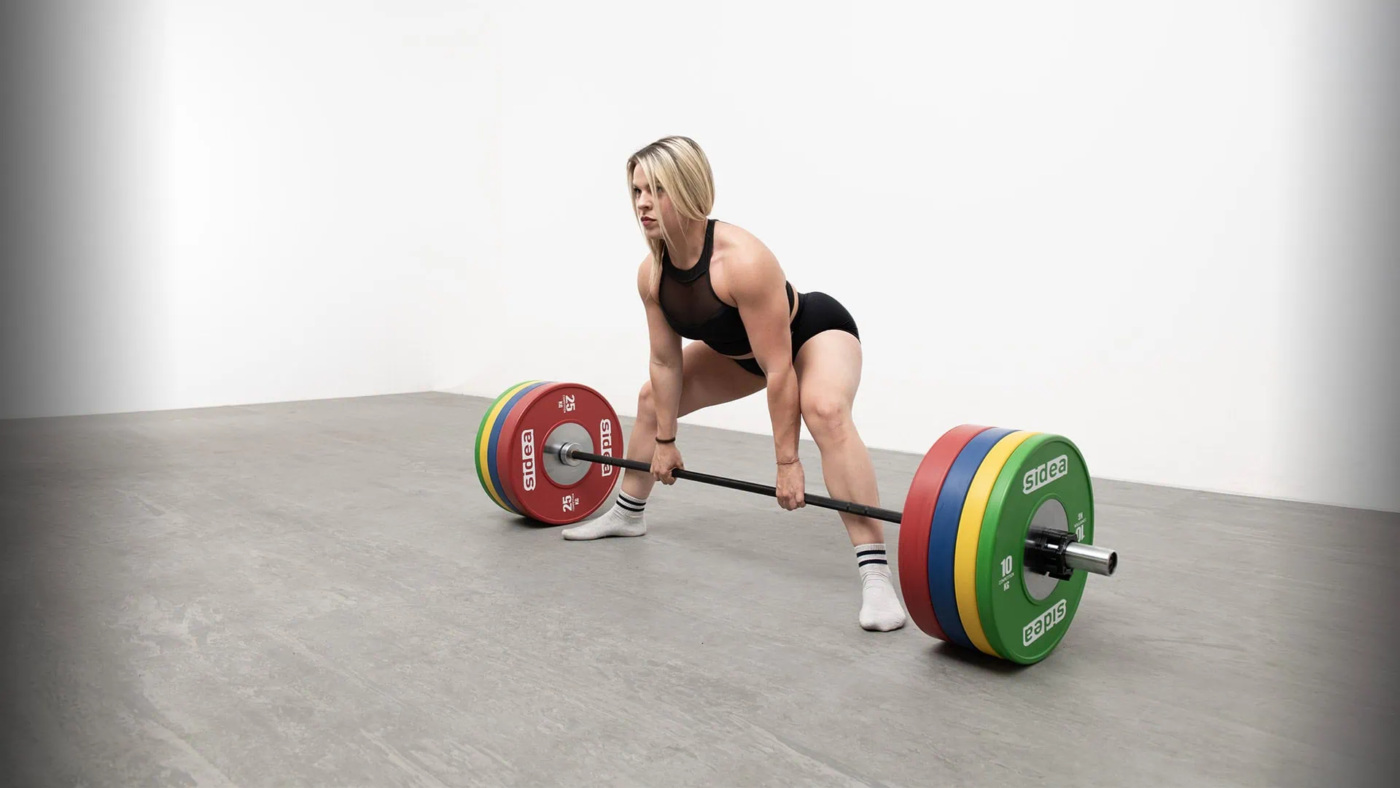
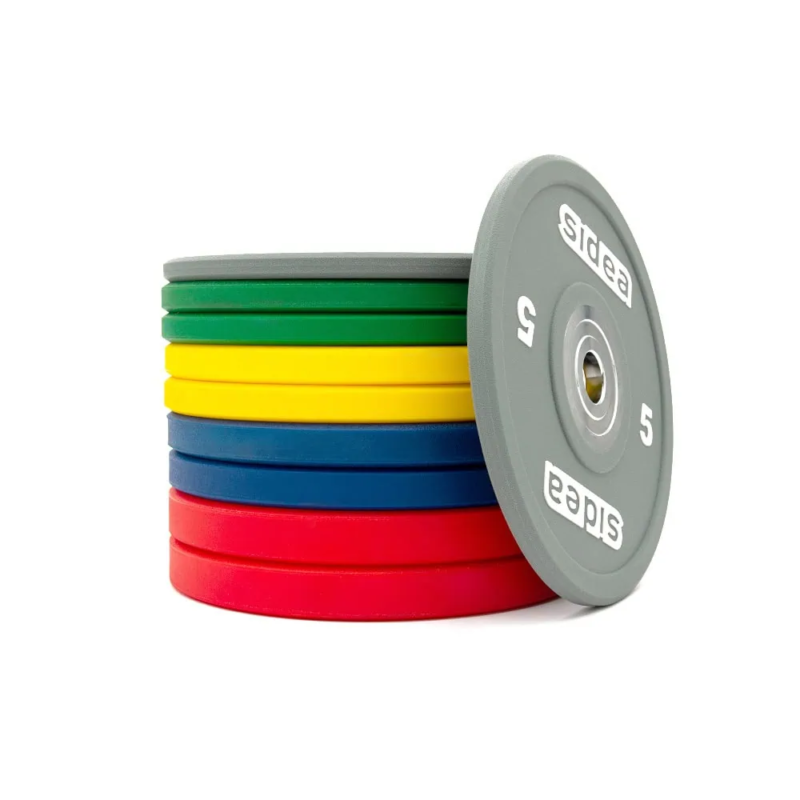
9042/5 – 9046/5 Competition Rubber Bumper Plate: The Competition Standard
- Material: High-quality rubber with a Ø 185 mm central steel plate
- Weight sizes: 10, 15, 20, 25 kg (IWF colors: green, yellow, blue, red)
- Thicknesses: 10 kg = 39 mm | 15 kg = 50 mm | 20 kg = 55 mm | 25 kg = 67 mm
- Pros: Very low bounce (dead bounce), millimetric precision on the bar, reduced thickness thanks to the central plate, compliance with international standards
- Cons: Does not include the 5 kg size (fractional plates are used in competition), higher priceWho it is for: Weightlifting athletes, gyms that host competitions, and anyone who wants the best in terms of feel and durability.
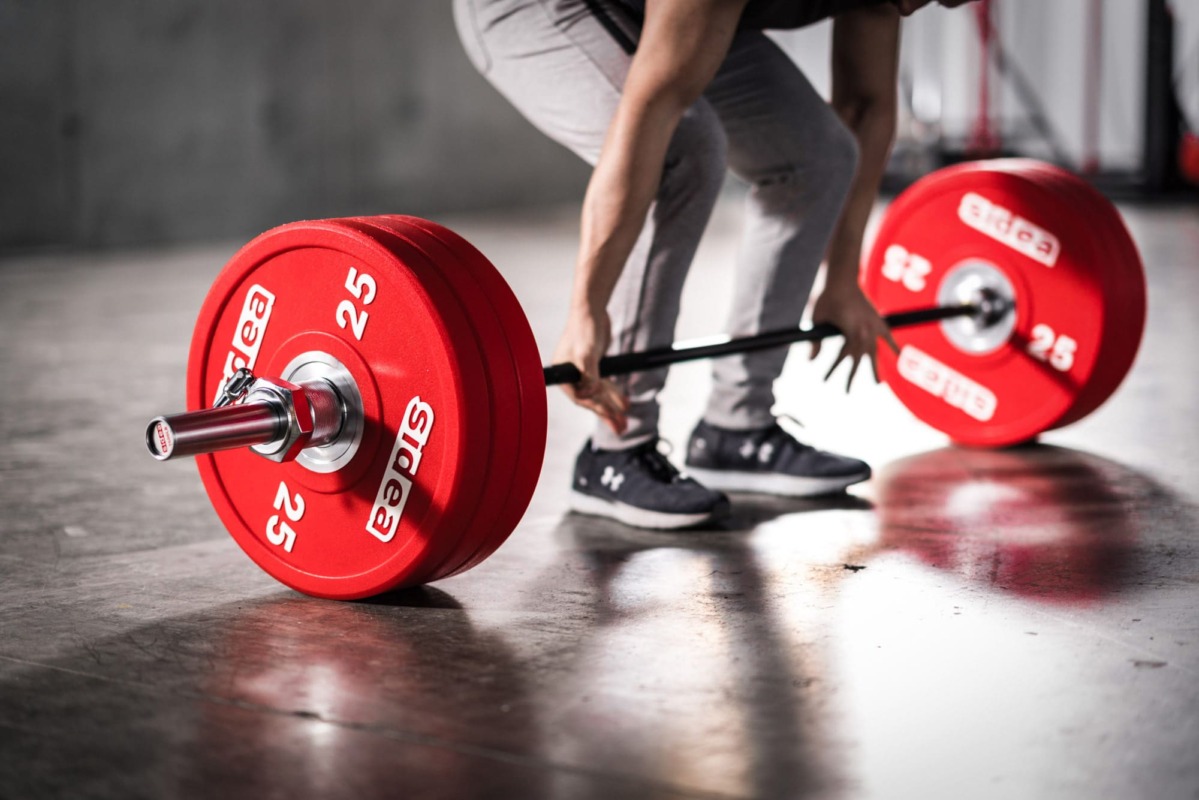
9040/3 – 9046/3 PU Bumper Plate Color: The Top of the Range
- Material: High-density polyurethane (PU)
- Weight sizes: 5, 10, 15, 20, 25 kg (IWF colors)
- Thicknesses: Extremely thin compared to rubber (approximate: 5 kg = 25 mm | 10 kg = 33 mm | 15 kg = 36 mm | 20 kg = 42 mm | 25 kg = 52 mm)
- Pros: Maximum wear resistance, zero odor, vivid and long-lasting colors, barbell loading capacity of over 350 kg, controlled bounce
- Cons: Higher rigidity = increased vibration transmission to the shaft, premium priceWho it is for: Those looking for the pinnacle of technology, who own a high-end barbell, and refuse to compromise on durability and style.
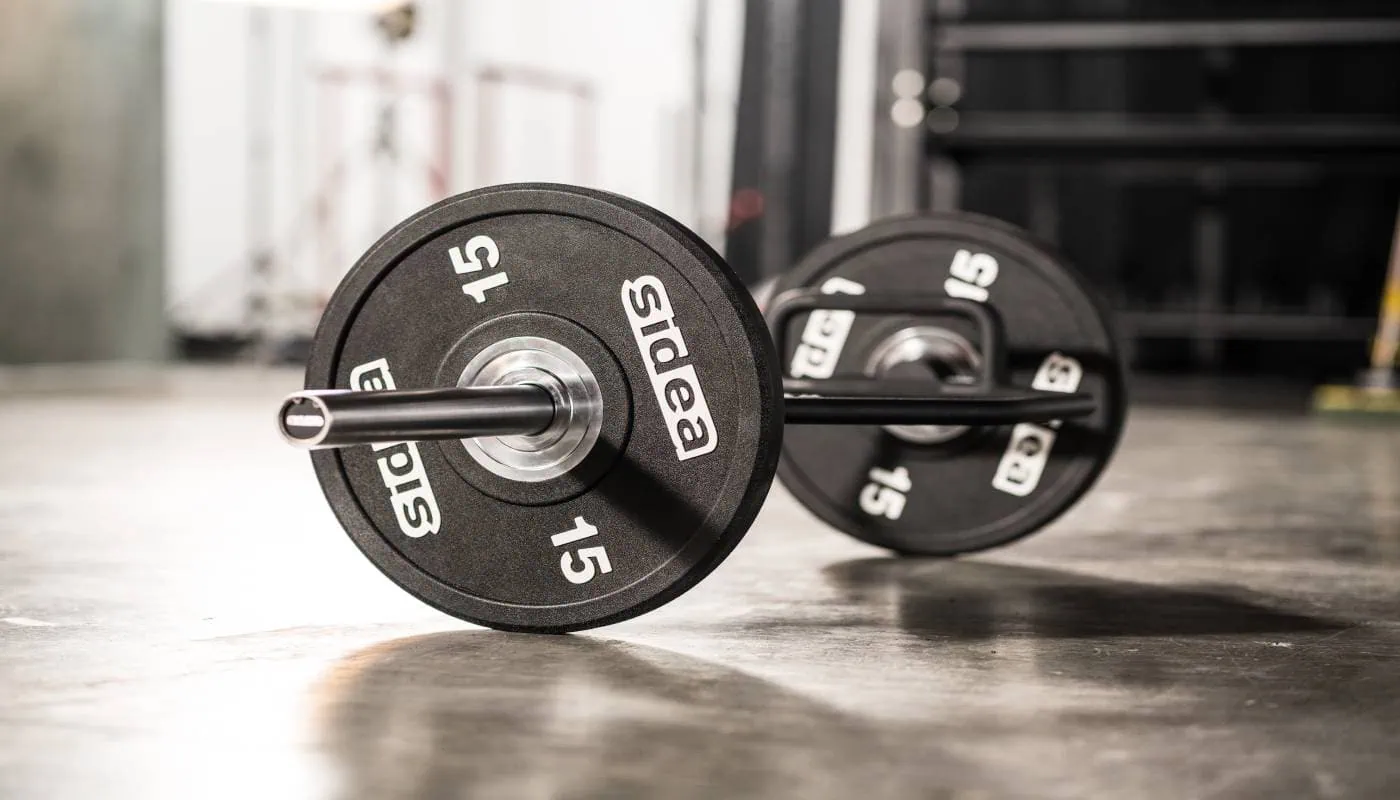
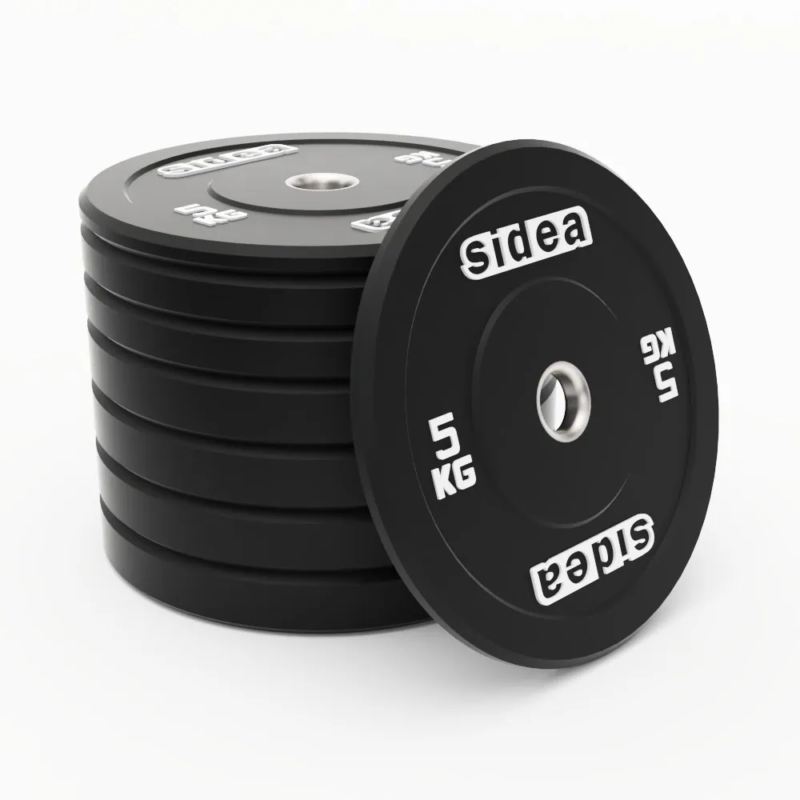
9040/4 – 9046/4 PU Bumper Plate Black: The Black Elegance
- Material: Polyurethane (PU), black finish with white details
- Weight sizes: 5, 10, 15, 20, 25 kg
- Pros: Same performance as the 9040/3 series but with a minimal and professional aesthetic, suitable for designer home gyms
- Cons: Same considerations regarding the rigidity of the PU seriesWho it is for: The athlete who does not want to sacrifice aesthetics without losing performance. Perfect for lofts and private studios.
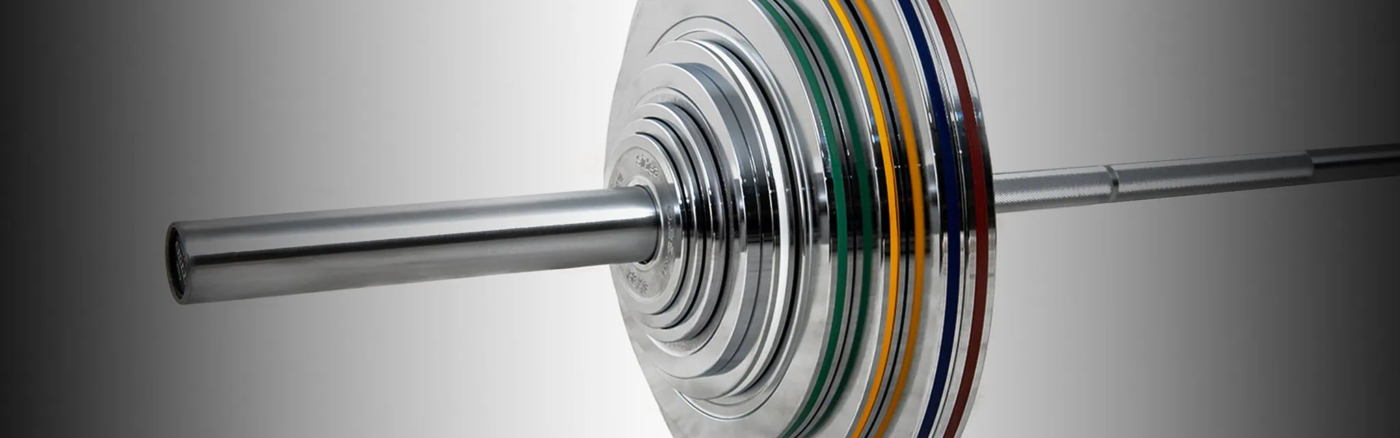
9036/6 – 9046/6 Powerlifting Plates: The Caliber of Iron
- Material: Calibrated steel, single-faced
- Weight sizes: 0.25, 0.5, 1.25, 2.5, 5, 10, 15, 20, 25 kg
- Pros: Extreme thinness, incredibly tight weight tolerance (e.g., ±1.5% on the 0.25 kg size), international standard colors, virtually eternal durability
- Cons: They are not bumper plates (do not drop them!), reduced diameter on lighter weight sizes, not suitable for droppingWho it is for: Pure powerlifters. To be paired with bumper plates only for top-set loads in squat or deadlift, never for the snatch or the clean & jerk.
Quick Comparison Table
| Model | Material | 20 kg Thickness | Bounce | Drop OK? | Best For |
|---|---|---|---|---|---|
| 9040/1 | Black Rubber | ~80 mm | Medium | Yes | Entry level / CrossFit |
| 9040/7 | Crumb Rubber | 77 mm | Medium | Yes | High-traffic boxes |
| 9042/5 | Competition Rubber | 55 mm | Low (dead bounce) | Yes | Weightlifting / competitions |
| 9040/3 | Color PU | ~40-45 mm | Very Low | Yes | Top performance / home gym |
| 9040/4 | Black PU | ~40-45 mm | Very Low | Yes | Design + performance |
| 9036/6 | Steel | 5-20 mm | N/A | No | Powerlifting / extreme loads |
How to Choose Your First Set: The 3x Rule
If you are about to buy your first set of bumper plates, follow this logic:
- Define your discipline: CrossFit and functional training = rubber or PU. Weightlifting = Competition or PU. Powerlifting = steel + bumper plates for protection only.
- Calculate the space on the barbell: If you plan to exceed a total of 150 kg, thick plates (9040/1) will force you to switch to a longer barbell (a regulation 220 cm bar). PU solves this problem.
- Assess your flooring: If you have a bare concrete floor, crumb rubber plates (9040/7) offer the best acoustic and impact protection.
Recommended starting set: 2x 5 kg + 2x 10 kg + 2x 15 kg + 2x 20 kg. If your budget allows, go straight for the 9040/3 PU series: you’ll only pay once.
FAQ – Frequently Asked Questions
Q: What is the difference between rubber and polyurethane bumper plates?
A: Rubber is more elastic and absorbs the initial impact better, but it wears out faster and has a greater thickness. Polyurethane (PU) is denser, thinner, odorless, lasts longer, and allows for heavier loads, but it transmits more vibration.
Q: Which bumper plate should I choose for CrossFit and functional training?
A: For a high-volume commercial box, the 9040/1 Black Rubber series or the 9040/7 Crumb Rubber series offers the best balance between durability and price. For a premium home gym, we recommend going with the 9040/3 PU series.
Q: Why does plate thickness change the exercise on a sled?
A: Because it shifts the center of mass vertically. A thick plate (rubber) raises the center of gravity, making the sled less stable. A thin plate (PU or competition) lowers it, increasing traction and modifying the pushing angle. In competitions like Hyrox, this is a critical performance factor.
Q: Are competition plates (9042/5) suitable for everyone?
A: They are optimal for those who practice Olympic weightlifting or require maximum precision. They do not include a 5 kg size (as fractional plates are used in competitions), so you will need to supplement them for a complete home set.
Q: Can Powerlifting Plates (9036/6) be dropped?
A: No. They are made of steel and are not designed for dropping. They should only be used for squats, bench presses, and deadlifts with a controlled release.
Q: What is the maximum weight I can load with PU Bumpers?
A: The 9040/3 series allows you to load over 350 kg on the barbell, thanks to the extreme thinness of the plates.
Q: Are Crumb Rubber plates (9040/7) less performant?
A: No, but they have a different texture and density. They are ideal for boxes with high turnover where aesthetic wear is inevitable. They have the highest thickness, which helps disperse the inertial energy of the drop.
Q: Is it better to buy a set/kit or individual pieces?
A: Sidea offers 100 kg kits for Crumb (9040/7K100) and Rubber (9040/1k100) plates, as well as 150 kg kits for PU (9040/3K150) and Rubber (9040/1k150) plates. If you are setting up a commercial box or a complete garage gym, buying the kits offers both a financial and logistical advantage.
In Conclusion: The Right Bumper is the One That Reflects Your Training
There is no such thing as the absolute “perfect plate.” There is only the perfect plate for you, your discipline, your flooring, and your goals. If you have learned just one thing from this guide, let it be this: thickness is a technical specification, not an aesthetic detail. Choosing a 9046/3 over a 9046/1 is not snobbery — it is biomechanical awareness.
Ready to load your barbell with the knowledge of a professional? Explore the complete Sidea catalogue and choose the set that will transform your training from “just lifting” to “calibrated performance.”