



When Strength Becomes Performance: Dr Mauro Franzetti’s Contribution to the Summit of Strength
On 1 February 2026, Cesena hosted the Summit of Strength, a StrongFirst event sponsored by SIDEA, dedicated to strength culture, athletic preparation, and the scientific dissemination of movement.
Among the most significant presentations of the day was that of Dr Mauro Franzetti PhD, professional Strength & Conditioning Coach and StrongFirst Elite, who addressed a central theme for those working in modern sports: the role of maximal strength in team sports, with a particular focus on football.
A seemingly technical topic, but actually fundamental to understanding how contemporary athletic performance is built. Because today, talking about strength no longer means just talking about barbells, heavy loads, or 1RM testing. It means talking about accelerations, decelerations, changes of direction, injury prevention, the ability to repeat intense efforts, and movement quality.
In other words, it means talking about what really happens on the pitch.
Modern Football Has Changed: More Intensity, More Speed, Higher Physical Demands
One of the starting points of Dr Franzetti’s presentation was the change in the performance model of football.
Compared to the 1970s and 1980s, contemporary football requires athletes to cover greater running volumes, but above all, a higher percentage of high-intensity actions. It is not just about “how much” you run, but how you run: accelerating, braking, changing direction, restarting, resisting opponents, and maintaining technical clarity under fatigue.
This shift is essential even for a non-expert audience to understand: a modern footballer is not simply an athlete with good endurance. They are an athlete who must produce force in very short times, direct it in the right direction, and manage it in unpredictable situations.
The match is not a continuous run. It is a sequence of intermittent, explosive, and multidirectional actions. And in this context, maximal strength becomes a decisive physical foundation.
Maximal strength is not just about “lifting more”
In everyday language, maximal strength is often associated with the ability to lift a very heavy load just once. This is a correct, but partial, definition.
In the context of team sports, maximal strength represents a sort of general “engine.” The more force an athlete can produce, the greater the potential available to express power, speed, stability, and control.
This does not mean that every footballer should train like a powerlifter. Rather, it means that adequate strength development allows the athlete to better meet the demands of the match: accelerating more effectively, resisting tackles, braking with more control, reducing the energy cost of certain actions, and better tolerating the loads of the season.
Strength, therefore, is not an isolated end. It is a tool at the service of performance.
Acceleration and Deceleration: The Invisible Heart of Performance
One of the most interesting themes of the presentation was the role of accelerations and decelerations.
When we talk about speed in football, the focus is often on sprinting. But the real game is also — and above all — made of braking. Every change of direction, every marking action, every loss of a marker, every pressing action, and every restart requires the ability to accelerate and then decelerate quickly and efficiently.
Deceleration is a highly demanding movement from a muscular, tendinous, and articular perspective. Braking means absorbing force. It means controlling the body while inertia pushes it in one direction and the game demands moving in another.
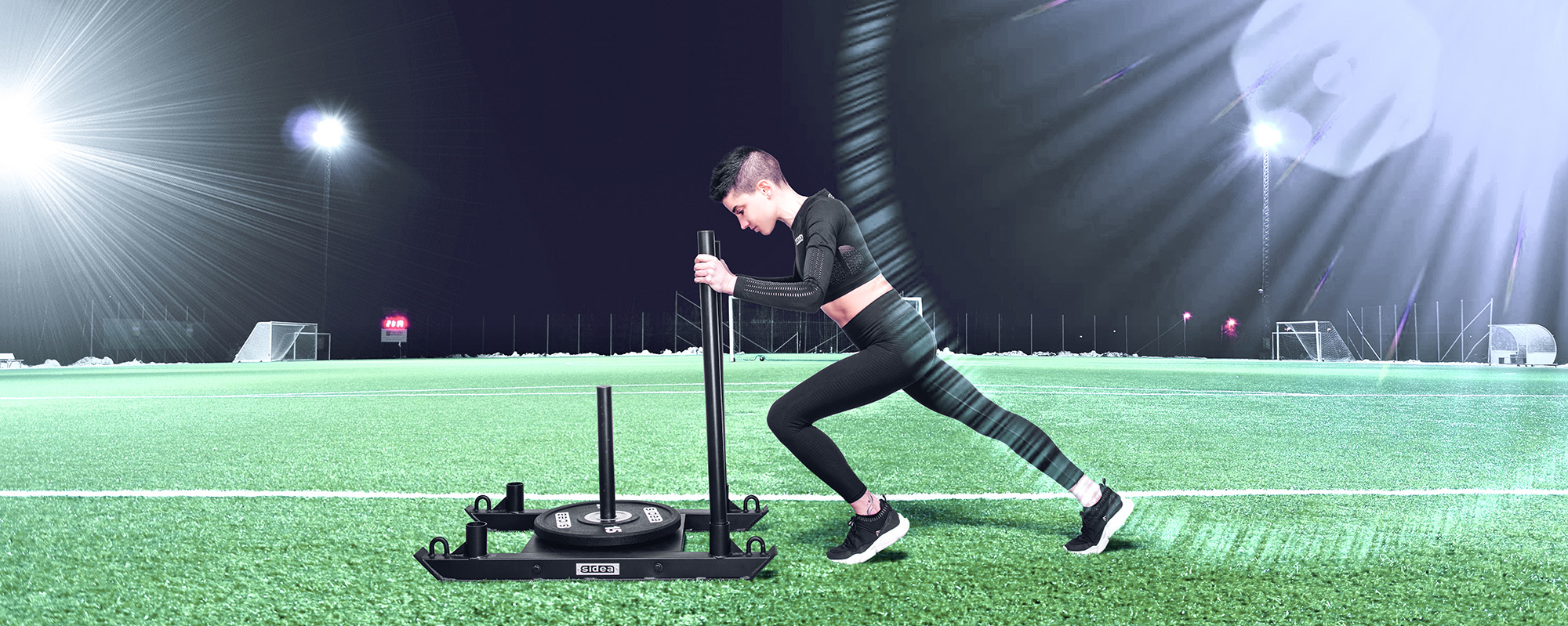
For this reason, Dr Franzetti placed great emphasis on training braking, eccentric loading, stance control, and the ability to manage horizontal forces. It is not enough to be strong “when pushing”: you must also be strong when stopping.
And this is exactly where modern physical preparation meets injury prevention. An athlete who can decelerate better is not only a better performer: they are also potentially more protected against overloads and high-risk situations, especially for knees, hamstrings, and the structures involved in changes of direction.
Vertical Vector or Horizontal Vector? The Answer Lies in the Context
Another key part of the presentation addressed a highly debated question in strength and conditioning: to improve athletic performance, is it better to use vertical vector exercises, such as squats and vertical jumps, or horizontal vector exercises, such as pushes, resisted sprints, and hip thrusts?
The most useful answer, as is often the case in sports science, is not a rigid one.
Dr Franzetti highlighted that the choice of exercises must take into account the specificity of the movement, but without falling into the trap of superficially imitating the sport itself. Training for strength does not mean copying the match inside the gym. It means building physical qualities that are transferable to the pitch.
For this reason, an effective program can include both vertical-dominant and horizontal-dominant exercises. The squat, the deadlift, jumps, pushing work, braking, and accelerations are not competing tools: they are different elements of the same architecture.
The question is not “which exercise is better in absolute terms?”, but “which exercise is useful for this athlete, at this moment, with this goal?”.
Concurrent Training: Can Strength and Endurance Coexist?
In team sports, strength is never trained in an ideal environment. The athlete must also run, perform metabolic work, practice tactics, recover, travel, play back-to-back matches, and manage fatigue.
From this arises the topic of concurrent training—namely, the coexistence of strength training and aerobic or metabolic training.
The risk, when programming is disorganized, is the so-called interference effect: one stimulus can reduce the adaptation produced by the other. However, this does not mean that strength and endurance are incompatible. It means they must be programmed with criteria.
The message is extremely practical: in team sports, it is not enough to know which exercises to propose. One must know when to propose them, with what intensity, with what volume, and at what distance from other training stimuli.
Programming therefore becomes a core competence. It is not an organizational detail: it is an integral part of the result.
Bilateral and Unilateral: Not a Choice, but an Integration
Another topic addressed by Dr Franzetti concerns the relationship between bilateral and unilateral exercises.
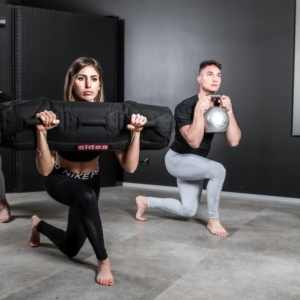
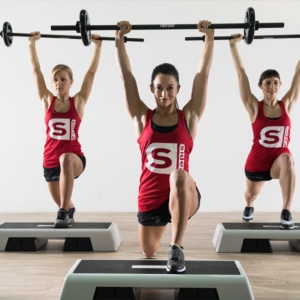
Bilateral exercises, such as the squat and deadlift, generally allow for the development of high levels of overall strength. On the other hand, unilateral exercises, such as lunges, split squats, and single-leg variations, introduce significant demands for stability, control, coordination, and asymmetry management.
In team sports, where most actions occur on alternating stances, in rotation, or under conditions of dynamic balance, unilateral training plays a highly relevant role. However, this does not eliminate the value of bilateral exercises.
The proposed synthesis is clear: a well-constructed program should include both. General strength and specific strength should not be viewed as two separate worlds, but as different levels of the same process.
Range of Motion and Specific Angles: The Body Must Be Trained, Not Just “Positioned”
The debate on specific angles is another highly present topic in athletic preparation.
Is it better to train at angles similar to those of the sporting movement, or to use more complete ranges of motion?
Once again, the answer is not ideological. Training must respect the principle of specificity, but without giving up the complete development of physical qualities. An adequate range of motion (ROM) can contribute to the development of strength, muscle mass, active mobility, and the tissues’ ability to tolerate stress in different positions.
For the athlete, this translates to having more motor resources available. And in the real game, where situations are never perfectly predictable, having more resources often means moving better.
Programming a Season: Strength as a Skill
The final part of the presentation brought the topic to an extremely concrete level: how to program strength training throughout a sports season.
Dr Franzetti showed examples of annual planning, distinguishing between the pre-season, the competitive period, and subsequent phases of the season. The goal is not to train everything all the time, but to distribute stimuli intelligently.
In the initial phase, technique is built, movement patterns are consolidated, baseline loads are established, and the athlete is prepared to tolerate higher intensities. During the season, however, strength must be maintained and developed without compromising freshness, match availability, and recovery.
One of the most interesting concepts is that of strength as a skill. Strength is not just a muscular quality: it is a neuromuscular competence. It must be learned, refined, maintained, and integrated into movement.
This approach transcends the old muscle-centric view and moves athletic preparation towards a more modern perspective: strength is not separated from coordination, technique, and motor control. It is part of how the athlete solves the problems presented by the game.
The SIDEA Philosophy: Equipment, Culture, and Movement Science
The value of an event like the Summit of Strength does not end with a single educational day. Its importance lies in the cultural direction it points towards.
For SIDEA, sponsoring initiatives of this level means promoting a vision of training founded on competence, methodology, and responsibility. Equipment is never just an object: it is a tool through which coaches, physical preparation trainers, physiotherapists, and athletes build quality movement.
The SIDEA philosophy is born precisely from here: Move Smarter, Get Stronger, Live Better.
Training better does not simply mean doing more. It means understanding why a certain choice is made, what adaptation is sought, and how that adaptation can improve performance, health, and movement quality.
In this sense, SIDEA does not limit itself to providing solutions for gyms, sports centers, functional studios, and professional facilities. SIDEA is committed to contributing to the dissemination of a more conscious training culture, in which science does not remain locked in laboratories but becomes a practical language for those working on the field every day.
From the Pitch to the Gym: The Bridge Between Research and Practice
Dr Mauro Franzetti’s presentation clearly demonstrated how important it is to create a bridge between scientific research and practical application.
Sports science must not become complication for its own sake. It must help in making better choices: selecting exercises, dosing loads, respecting recovery times, reading the athlete’s needs, and adapting programming to the competitive calendar.
At the same time, practice cannot rely solely on intuition or personal experience. Experience is fundamental, but it becomes even more powerful when guided by data, scientific literature, and a coherent methodological vision.
It is exactly in this space that events like the Summit of Strength become valuable: places where different professionals can compare notes, update their knowledge, and build a common language.
Conclusion: Strength as a Culture, Not a Trend
Dr Franzetti’s presentation at the Summit of Strength in Cesena reiterated a fundamental concept: in team sports, maximal strength is not an accessory. It is a foundation upon which to build acceleration, deceleration, power, control, resilience, and performance consistency.
However, for strength to be truly useful, it must be trained systematically. It must be integrated into intelligent programming. It must converse with technique, the performance model, prevention, and the real demands of the season.
This is the message that SIDEA supports through its commitment to the dissemination of movement science: making training more conscious, more effective, and closer to the real needs of athletes, coaches, and professional facilities.
Because strength is not just a physical quality.
It is a culture.
And it is from this culture that a smarter way to train, get stronger, and live better is born.
FAQ
What is the role of maximal strength in team sports?
Maximal strength represents a fundamental physical foundation to express power, acceleration, stability, tackling ability, and control during decelerations. It is not just useful for lifting heavy loads, but for improving the overall quality of athletic performance.
Why is deceleration so important in football?
Deceleration allows the athlete to brake, change direction, react to opponents, and control the body in high-intensity situations. It is a decisive capability both for performance and for injury prevention.
Is it better to train bilateral or unilateral exercises?
In team sports, it is beneficial to integrate both. Bilateral exercises help develop high levels of general strength, while unilateral exercises improve control, stability, coordination, and asymmetry management.
What is concurrent training?
Concurrent training is the combination of strength training and metabolic or endurance training. It is inevitable in team sports, but it must be carefully programmed to avoid interference and optimize adaptations.
What is SIDEA’s role in the dissemination of movement science?
SIDEA promotes a training culture based on methodology, scientific evidence, and practical application. Through events, educational content, and professional training solutions, SIDEA contributes to spreading a more conscious vision of strength, movement, and physical preparation.
In Summary
At the Summit of Strength 2026, sponsored by Sidea, Dr Mauro Franzetti presented the role of maximal strength in team sports. In modern football, accelerations, decelerations, and intermittent actions require strength as a foundation for power, control, and prevention. Concurrent training, bilateral-unilateral exercises, and seasonal programming transform strength into a neuromuscular skill transferable to the pitch.
Key Takeaways
- During the pre-season phase, technique is built, movement patterns are consolidated, and tolerances to high intensities are prepared. During the competitive period, the goal becomes to maintain and develop strength without compromising freshness and recovery. Strength must be treated as a neuromuscular skill to be learned, refined, and integrated into movement, not just as an isolated muscular quality.
Related Equipment
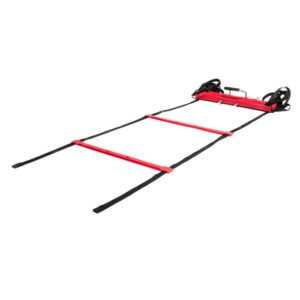
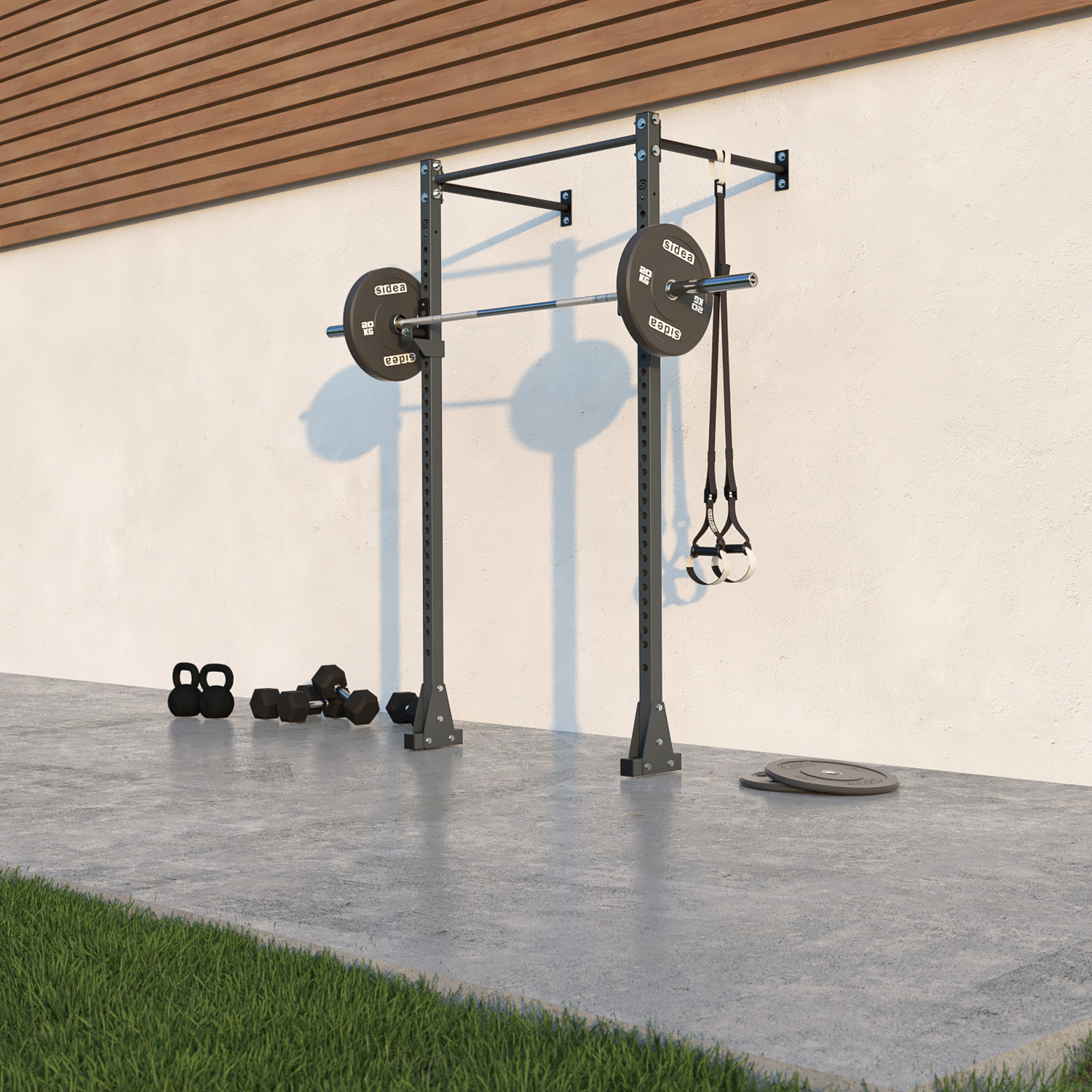
- Professional Power Rack — Essential for training squats, deadlifts, and progressive-load bilateral exercises in team athletic preparation. Discover more →
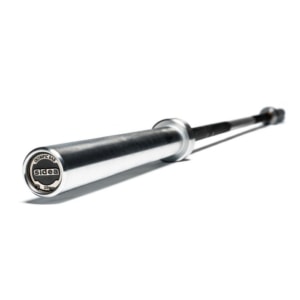
- 20kg Olympic Barbell IWF Certified — The core tool to develop maximal strength and power in athletes, suitable across all movement vectors. Discover more →
- Modular Weightlifting Platform — Allows for safe training of vertical accelerations, Olympic lifts, and ballistic movements for athletic conditioning. Discover more →