







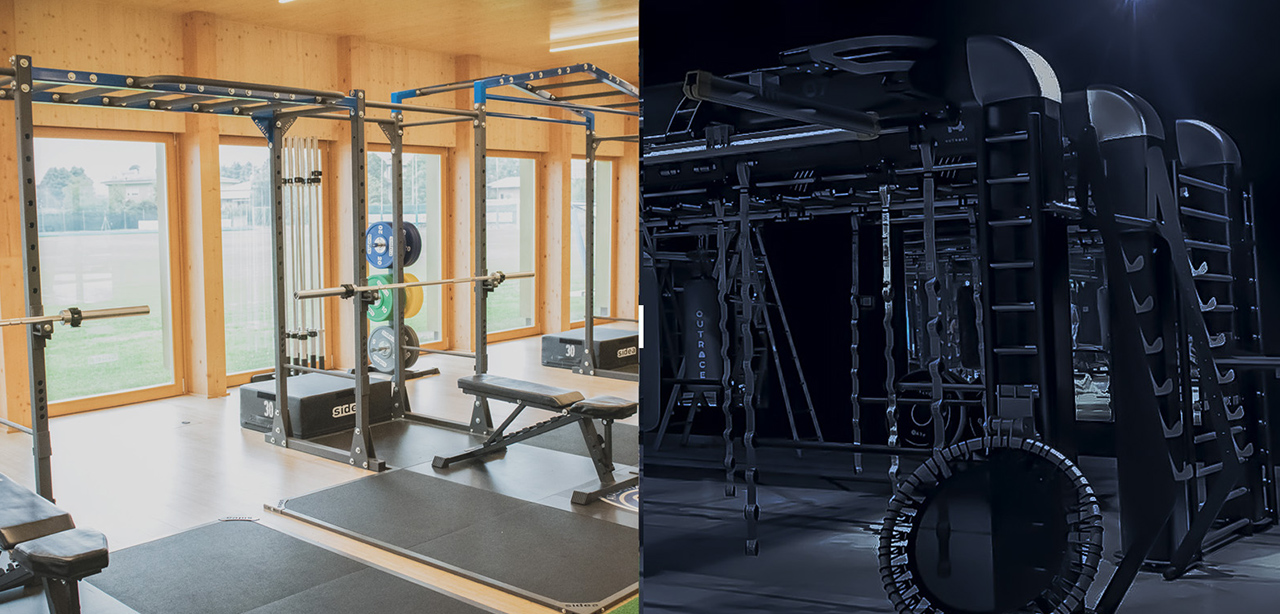
PHA and Jump Sets on the 9089K1 Cable Station: Building Strength, Improving Microcirculation, and Increasing Training Density Without Overtraining on a Single Station
In modern fitness, time has become a decisive factor. People want workouts that are effective, comprehensive, challenging, yet sustainable. Coaches and training professionals, on the other hand, are looking for methods capable of combining strength, technical control, metabolic conditioning, and intelligent fatigue management.
Among the most interesting methods in this regard is Peripheral Heart Action Training, better known as PHA. It is a form of circuit training based on alternating exercises for the lower and upper body. The principle is simple: instead of concentrating fatigue on the same muscle group, the workload is distributed across different and distant body areas, requiring the cardiovascular system to continuously support the redistribution of blood flow.
In the reference material, PHA is described as a method with a strong systemic impact, distinct from the classic Jump Set, which is more focused on local training density and targeted hypertrophy. The slides also highlight the concept of blood shunting, meaning the dynamic redistribution of blood between different body regions during exercise alternation.
This approach fits perfectly with the Premium Smart Cable Station 9089K1, a cable station that allows users to build a complete workout without changing equipment. Lower-body and upper-body exercises, pulling and pushing movements, glute work, postural exercises, and muscle-finishing exercises can all be integrated into a single, fluid, and easily repeatable routine.
What Is PHA Training?
Peripheral Heart Action Training is a training method designed to alternate exercises targeting distant muscle groups, generally the upper and lower body.
In a traditional circuit, exercises may be performed sequentially without a specific physiological rationale: squats, push-ups, planks, lunges, burpees, rows. In PHA, however, the order of the exercises is essential. A lower-body exercise is followed by an upper-body exercise, and vice versa.
This produces three main effects.
The first is better fatigue distribution. While the legs are working, the upper body gets a relative recovery period; when the upper body works, the lower limbs receive relative recovery.
The second is an increase in training density. Downtime is reduced without turning every exercise into an extreme endurance challenge.
The third is greater cardiovascular involvement. The heart must support the continuous shift in blood-flow demand between distant muscle groups, maintaining an elevated heart rate and metabolic demand.
A study examining the metabolic profile of PHA found that, compared with traditional resistance training with the same training volume, PHA can produce higher values of percentage of VO₂max, perceived maximum heart rate, EPOC, and perceived exertion, while completing the session in less time.
PHA and the Cardiovascular System: Why Is It Different from a Generic Circuit?
The most interesting characteristic of PHA is not simply the perceived level of fatigue. It is the quality of the stimulus.
Systematically alternating upper- and lower-body exercises creates a continuous cardiovascular adaptation demand. The body does not work as a collection of isolated muscle groups, but as an integrated system.
In the slides, this phenomenon is represented as a kind of figure-eight circulation pattern: blood is alternately directed toward the lower and upper limbs, increasing cardiovascular demand without prematurely exhausting a single muscle group.
This alternation may also help stimulate the so-called muscle pump, particularly in the lower limbs. Each muscle contraction contributes to venous return, helping move blood from the periphery back toward the heart. This aspect may be particularly interesting for people who spend many hours sitting or standing and are looking for a workout capable of dynamically activating peripheral circulation.
It is important, however, to be clear: PHA is not a medical therapy and does not replace clinical protocols in cases of edema, venous insufficiency, lymphedema, or cardiovascular disease. When incorporated into an appropriate training program, however, it can be an effective method for combining muscular work, peripheral activation, and overall conditioning.
Autonomic Adaptations: The Role of the Nervous System
Another relevant aspect concerns the autonomic nervous system, which regulates involuntary functions such as heart rate, blood pressure, and vascular tone.
A study published in the European Journal of Applied Physiology compared PHA with HIIT, evaluating their effects on cardiovascular regulation and autonomic adaptations. After 30 sessions over three months, PHA showed positive effects on vagal modulation and cardiovascular control at rest.
In simple terms, better autonomic balance may indicate a greater ability of the body to manage physiological stress and recover. This makes PHA an interesting training method not only for “burning calories,” but also for providing a deeper and more systemic stimulus.
The slides summarize this concept using the image of an autonomic seesaw: before training, the body is more strongly shifted toward sympathetic activity; after a PHA training cycle, the system tends toward greater balance, with an increase in the vagal component.
Why Use the Premium Smart Cable Station 9089K1?
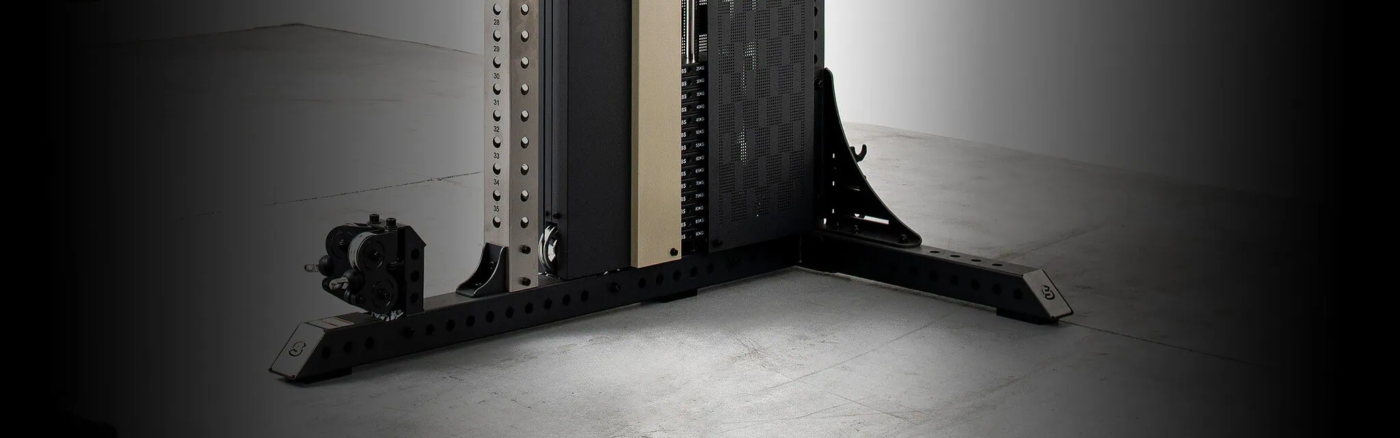
The Premium Smart Cable Station 9089K1 is particularly well suited to this type of training because it allows multiple movement patterns to be performed at a single station.
With a cable station, you can train:
- Squats
- Hip hinges
- Vertical pulls
- Horizontal pulls
- Glute exercises
- Postural exercises
- Pushing movements
- Core and stabilization exercises
- Adduction and abduction exercises
The major advantage in a PHA context is continuity. There is no need to move between racks, dumbbells, selectorized machines, and different benches. The user stays in the same training area, adjusts the cable, changes the grip or attachment, and moves on to the next exercise.
This makes the method more organized, safer, and easier to present in a communication setting: a video, reel, or demonstration with a fitness influencer can clearly show how a single machine can deliver a complete, challenging, and modern workout.
PHA or Jump Set? In This Case, They Work Together
Technically, the proposed program combines two training concepts.
The first is PHA, because it systematically alternates lower-body and upper-body exercises.
The second is the Jump Set, because each block consists of a pair of exercises performed alternately, with a programmed rest period after completing the pair.
This structure is particularly effective because it helps maintain a high level of technical quality. The goal is not to perform random exercises with no rest, but to organize the workout into intelligent blocks:
Lower + Upper → Rest → Repeat the Block
This creates a workout that is dense but not chaotic. The load remains manageable, technique stays under control, and fatigue is distributed across different muscle groups.
Suggested Workout Program with the Cable Station 9089K1
Below is a routine structured entirely around the Premium Smart Cable Station 9089K1, designed to alternate lower- and upper-body work while maximizing training density, circulatory stimulus, and movement quality.
The goal is to create a complete workout consisting of 4 blocks, each made up of 2 exercises.
First Block
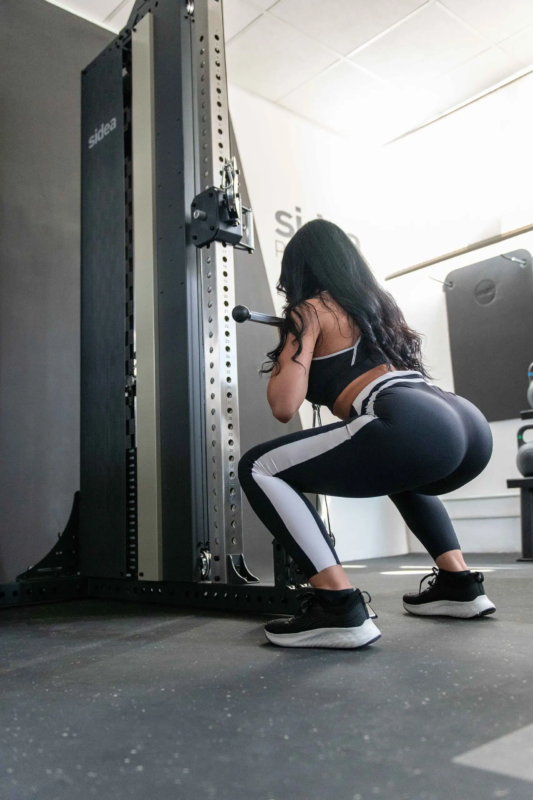
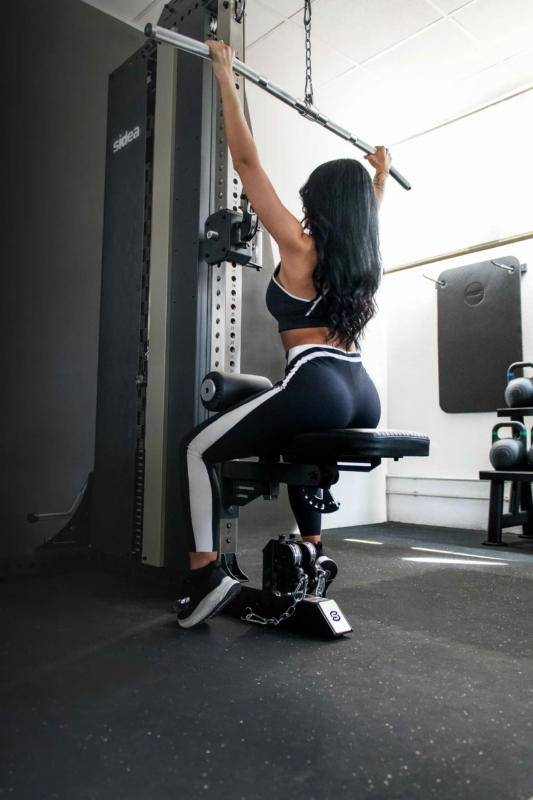
Low Cable Goblet Squat + Lat Pulldown
- Repetitions: 8 per exercise
- Sets: 4
- Rest: 90 seconds between each lower + upper Jump Set
The first block immediately introduces the core principle of the method: a lower-body dominant exercise followed by an upper-body pulling movement.
The Low Cable Goblet Squat targets the quadriceps, glutes, and core while maintaining continuous tension. The cable resistance helps enhance awareness of torso control and movement depth.
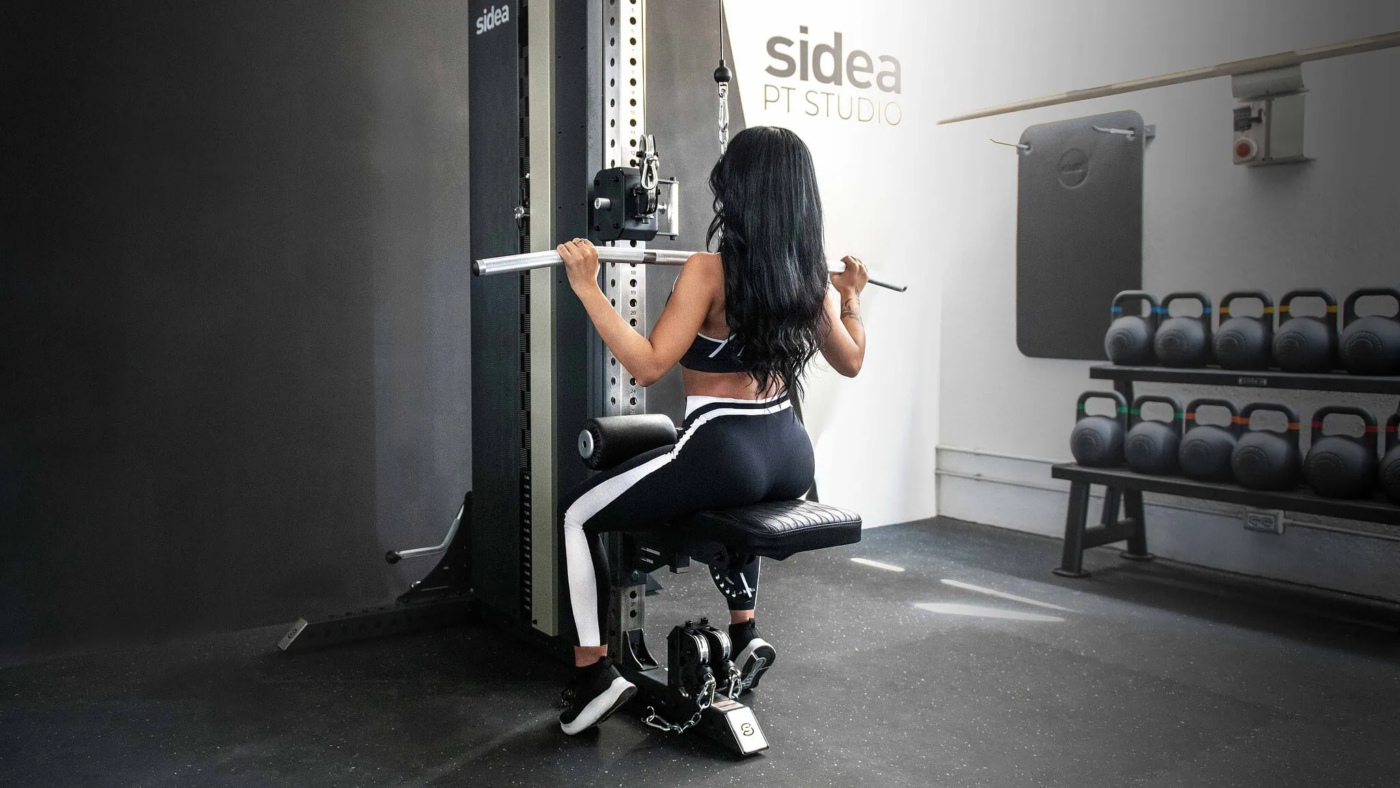
The Lat Pulldown immediately shifts the focus to the upper body, engaging the lats, teres major, and elbow flexors. While the lower body receives a partial recovery, the cardiovascular system continues to support the overall effort.
This block is ideal for opening the session because it combines strength, control, and training density without immediately pushing the athlete into excessive metabolic fatigue.
Second Block
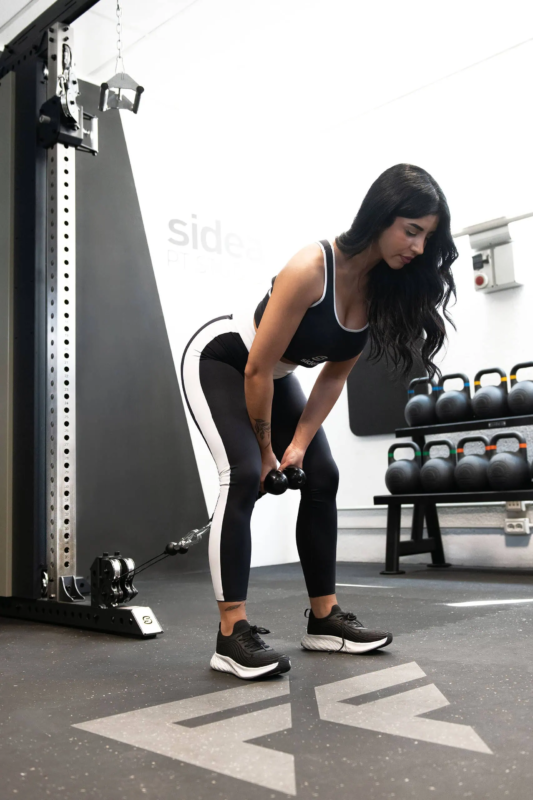
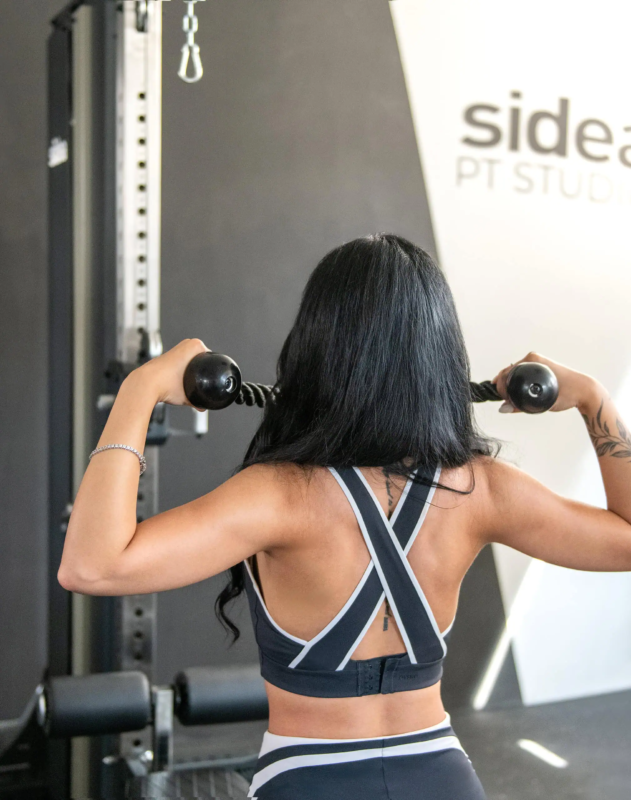
Low Cable Pull-Through + Face Pull
- Repetitions: 12 per exercise
- Sets: 3
- Rest: 1 minute between sets
The second block introduces highly effective work for the posterior chain and postural control.
The Low Cable Pull-Through is an excellent exercise for training hip extension, the glutes, and the hamstrings. Compared with a traditional deadlift, it allows for a more guided movement path and continuous tension, reducing technical complexity and making it well suited to higher-density training.
The Face Pull complements the block with a fundamental exercise for the rear deltoids, middle and lower trapezius, external rotators, and scapular control. It is particularly useful for counterbalancing the rounded, closed postures commonly associated with daily life and sedentary work.
In this block, the shorter rest period increases the cardiorespiratory demand. The 12-repetition range allows volume to accumulate without requiring excessively heavy loads.
Third Block
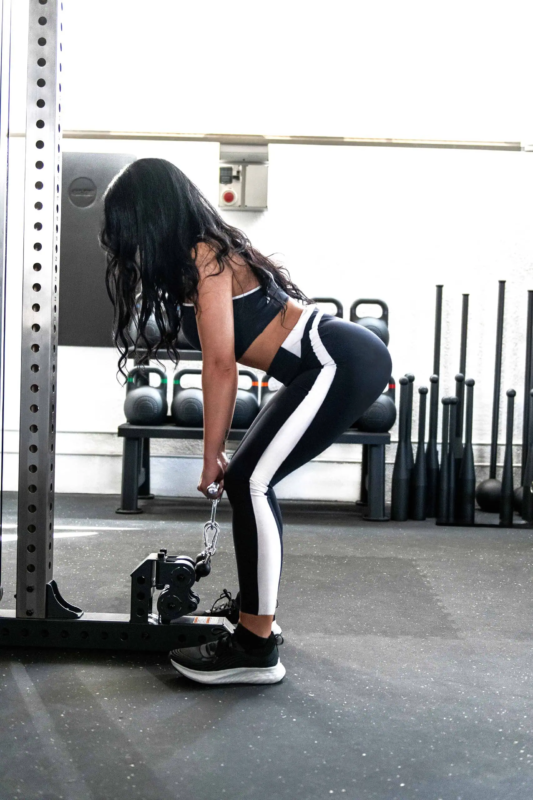
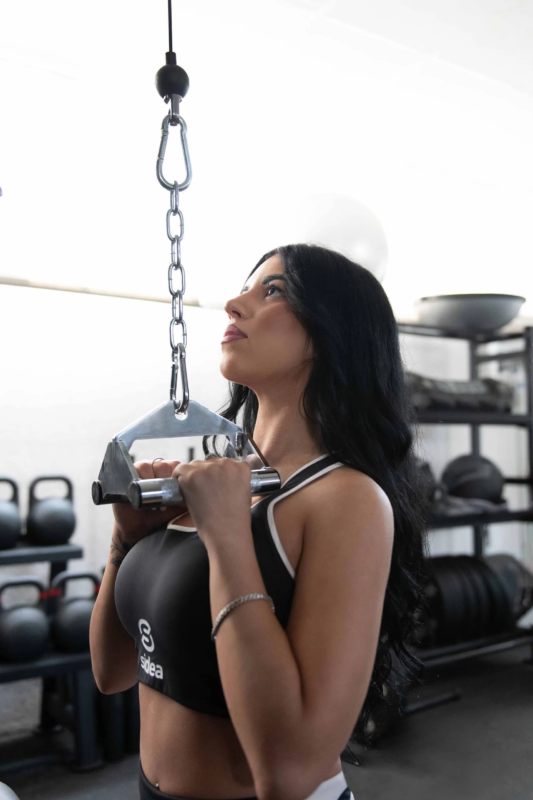
Low Cable Romanian Deadlift + Close-Grip Lat Pulldown with Triangle Handle
- Repetitions: 8 per exercise
- Sets: 4
- Rest: 90 seconds between sets
The third block returns to a higher intensity while maintaining the upper/lower training principle.
The Low Cable Romanian Deadlift specifically targets the glutes, hamstrings, spinal erectors, and hip control. The cable resistance allows continuous tension to be maintained throughout both the eccentric and concentric phases, making the movement particularly effective for training the posterior chain.
The Close-Grip Lat Pulldown with Triangle Handle introduces a narrower-grip vertical pulling movement, increasing the involvement of the lats and muscles of the mid-back. Alternating it with the Romanian deadlift creates a very complete block: the posterior lower body and posterior upper body work sequentially, but with different muscular demands.
This block is also particularly interesting from a circulatory perspective: the workload shifts from the lower limbs to the upper body, maintaining a high systemic demand and promoting a dynamic distribution of fatigue.
Fourth Block
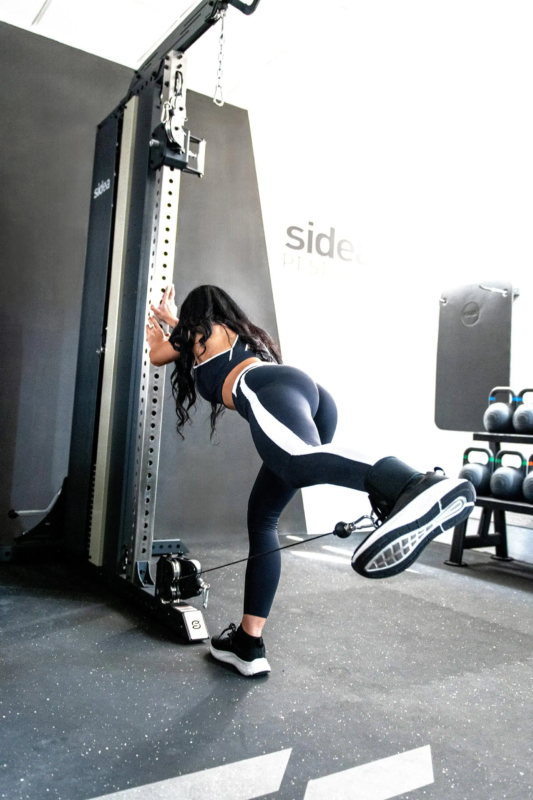
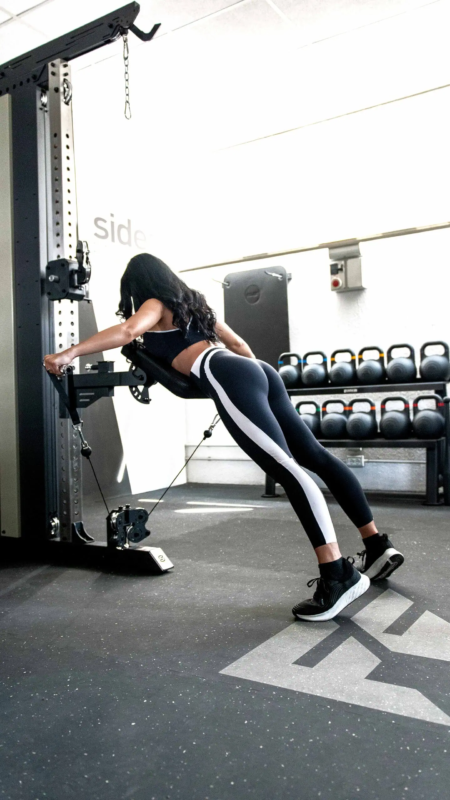
Cable Glute Kickbacks + Rear Delt Fly
- Repetitions: 12 + 12 lower body / 12 upper body
- Sets: 3
- Rest: 60–90 seconds, depending on the individual’s fitness level
The fourth block serves as a finishing block. This is the point at which the workout becomes more noticeable from a muscular perspective, with a focus on the glutes, rear deltoids, and movement control.
Cable Glute Kickbacks allow for targeted work on hip extension and activation of the gluteus maximus. The unilateral execution makes it possible to focus on contraction quality and pelvic control. The 12 + 12 scheme means 12 repetitions per side.
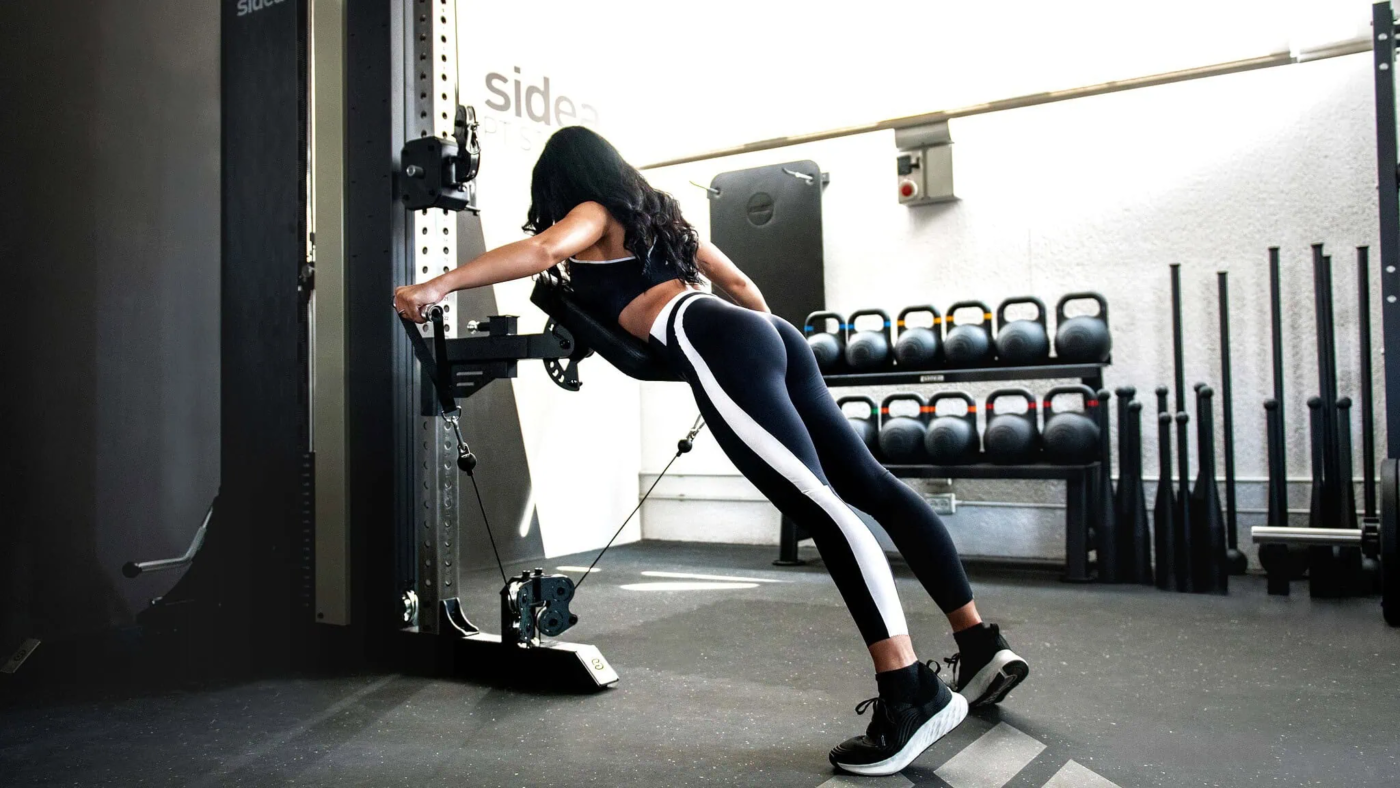
The Rear Delt Fly completes the block with targeted work for the rear deltoids and scapular musculature. It is an ideal exercise for closing the session with a postural stimulus and a pump effect in the upper back.
This block is also highly effective from a communication perspective: cable glute kickbacks are an immediately recognizable exercise, making them particularly suitable for video content focused on glute training, while the Rear Delt Fly demonstrates the versatility of the station for precise upper-body work.
Workout Summary
| Block | Focus | Lower-Body Exercise | Upper-Body Exercise | Repetitions | Sets | Rest |
|---|---|---|---|---|---|---|
| 1 | Intensity | Low Cable Goblet Squat | Lat Pulldown | 8 + 8 | 4 | 90 sec |
| 2 | Volume | Low Cable Pull-Through | Face Pull | 12 + 12 | 3 | 1 min |
| 3 | Intensity | Low Cable Romanian Deadlift | Close-Grip Lat Pulldown with Triangle Handle | 8 + 8 | 4 | 90 sec |
| 4 | Volume | Cable Glute Kickbacks | Rear Delt Fly | 12 + 12 / 12 | 3 | 60–90 sec |
Technical Guidelines for Execution
To get the most out of this protocol, the load should be challenging but manageable. PHA does not require absolute muscular failure. On the contrary, it works best when movement quality remains high throughout the entire session.
Perceived exertion should increase progressively, but without compromising posture, breathing, or joint control. A useful practical guideline is to work with 1–2 repetitions in reserve (RIR) for most sets.
The transition between the two exercises within each block should be quick but controlled. The time required to adjust the cable height, grip, or body position becomes part of the overall training management.
For less-trained individuals, you can increase the rest period between blocks or reduce the total number of sets. For more experienced individuals, you can progressively increase the load, slightly reduce rest periods, or introduce a more controlled time under tension
Why This Workout Highlights the 9089K1
This protocol clearly demonstrates the versatility of the Premium Smart Cable Station 9089K1.
With a single machine, you can move from a cable squat to a lat pulldown, from a pull-through to a face pull, from a Romanian deadlift to a triangle-handle pulldown, and finally to finishing exercises such as cable glute kickbacks and rear delt flys.
The value of the station lies not only in the number of exercises it can accommodate, but also in its ability to create a continuous training flow. For a personal trainer, this means being able to manage a complete workout in a limited space. For an advanced home gym, it means having a machine capable of meeting a wide range of training needs. For a fitness facility, it means offering a guided, intuitive, and easily scalable workout experience.
From a marketing perspective, the message is very strong: one station, four blocks, eight exercises, one complete workout.
It is also an ideal format for a future video featuring a fitness influencer, because it allows the machine to be showcased in action through a clear and immediate structure: each block has a specific objective, each exercise has a defined purpose, and every transition highlights a different use of the station.
PHA, Circulation, and the Feeling of Lighter Legs
One of the reasons this structure is particularly interesting is the continuous alternation between lower-body and upper-body exercises. This promotes dynamic stimulation of the muscle pump and prevents all the fatigue from being concentrated in a single muscle group.
Exercises such as the Goblet Squat, Pull-Through, Romanian Deadlift, and Cable Glute Kickbacks strongly engage the glutes, hamstrings, and lower-limb muscles. These muscle groups play an important role in supporting peripheral circulation during movement.
At the same time, alternating them with the Lat Pulldown, Face Pull, Close-Grip Lat Pulldown with Triangle Handle, and Rear Delt Fly allows the lower body to recover partially while maintaining a high cardiovascular demand.
In the presence of clinical conditions such as chronic edema, venous insufficiency, lymphedema, or cardiovascular disease, the choice of training protocol should always be assessed by qualified professionals. Research on exercise, myogenic responses, and peripheral circulation suggests that movement can positively influence certain vascular mechanisms, but these findings should not be turned into generic therapeutic claims.
Who Is This Type of Workout Suitable For?
This workout is particularly suitable for people looking for a complete, challenging, and well-structured training session.
It can be useful for intermediate-level users, personal trainers, professional studios, advanced home gyms, and small fitness facilities looking to offer dense, modern training sessions without relying on multiple machines.
It is particularly appropriate when the goal is to improve:
- Muscle tone
- Training density
- General fitness
- Ability to sustain physical effort
- Coordination between the upper and lower body
- Awareness of the work performed by the glutes and posterior chain
- Overall training-session efficiency
It is not, however, the ideal choice for maximal-strength training, learning technically complex exercises, or unsupervised clinical rehabilitation protocols.
Conclusion
PHA Training applied to the Premium Smart Cable Station 9089K1 represents an effective solution for combining strength, training density, metabolic work, and circulatory stimulus in a single session.
The lower/upper-body alternation helps distribute fatigue, maintain an elevated heart rate, and take advantage of continuous cable tension to improve movement control, technical quality, and muscular awareness.
The four-block program — Goblet Squat and Lat Pulldown, Pull-Through and Face Pull, Romanian Deadlift and Close-Grip Lat Pulldown with Triangle Handle, Cable Glute Kickbacks and Rear Delt Fly — clearly demonstrates how a single station can become the centerpiece of a complete workout.
This is not a random circuit. It is a routine built around a clear strategy: first strength and training density, followed by metabolic stimulus, then hypertrophy and circulation, and finally muscle refinement and pump.
For the person training, it is an effective and engaging method.
For the coach or trainer programming the workout, it is a versatile tool.
For fitness communication and marketing, it is a clear, modern format that is also ideal for video content.
FAQ
What Is PHA Training?
PHA Training is a circuit-training method that alternates exercises for the lower and upper body, with the goal of distributing fatigue and increasing cardiovascular demand.
Can I Do PHA Using a Single Cable Station?
Yes. A station such as the Premium Smart Cable Station 9089K1 allows you to build complete circuits by alternating lower- and upper-body exercises without changing stations.
What Is the Difference Between PHA and a Jump Set?
PHA emphasizes alternating between distant muscle groups, such as the legs and upper body. A Jump Set organizes two exercises into a pair, often targeting antagonist or complementary muscle groups, with a programmed rest period. In this workout, the two approaches are integrated.
Is This Workout Suitable for Weight Loss?
It can contribute to increased energy expenditure and greater training density, but weight loss ultimately depends on the overall energy balance, nutrition, and consistency of training.
Is This Workout Suitable for Beginners?
It can be adapted, but for beginners it is advisable to reduce the number of sets, loads, and training density, prioritizing proper exercise technique first.
Why Use the 9089K1 for This Workout?
Because it allows all the exercises to be performed at a single station, reducing transition times and showcasing the versatility of the cable station in a practical, clear, and easily communicable way.